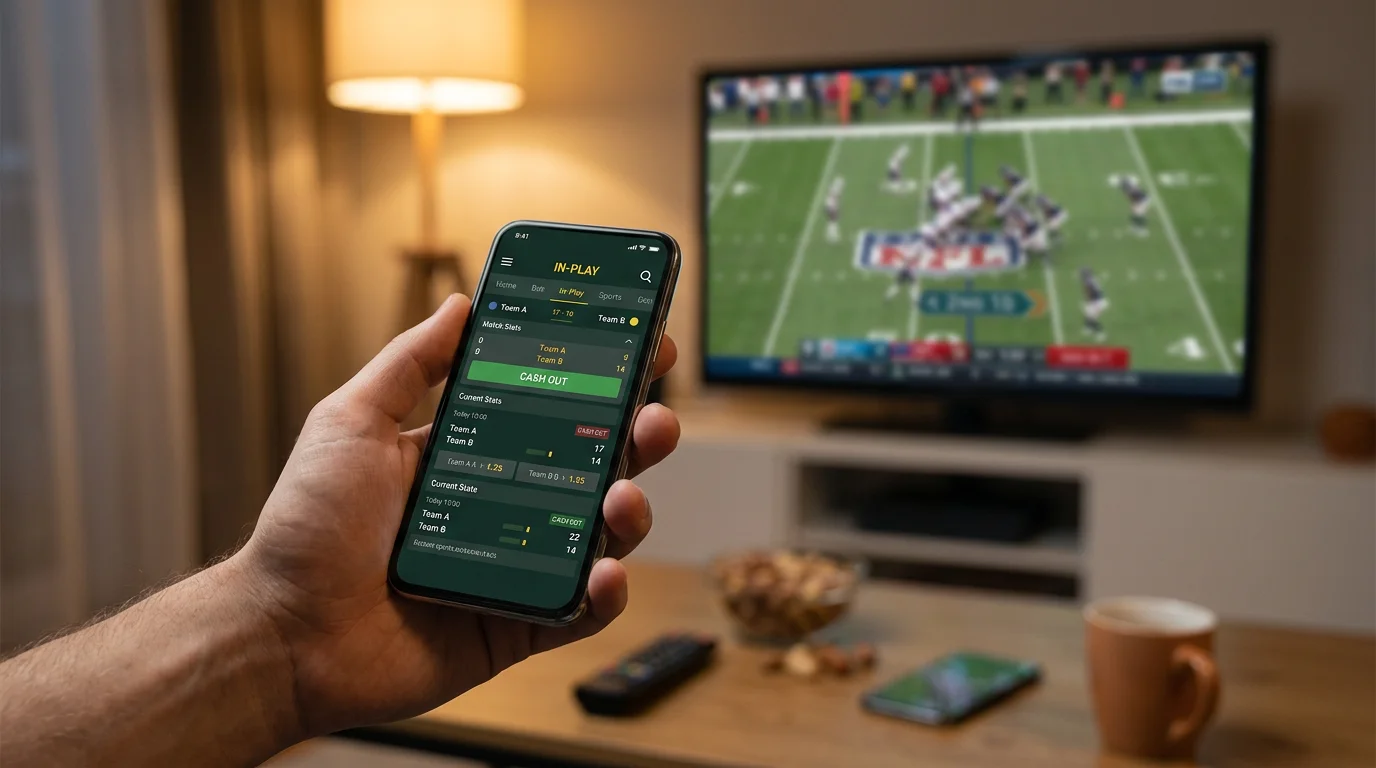
NFL Wagering Guide for UK Punters
UK Sports Betting NFL: The Data-Backed Guide to American Football Wagering in Britain
 Available in US
Table of Contents
- Key Metrics and Market Movements in NFL Betting
- The UK Betting Market and Why NFL Matters
- How the NFL Season Shapes the Betting Calendar
- Core NFL Bet Types Every UK Punter Needs
- NFL Key Number Spread Calculator
- NFL Bookmaker Landscape in the UK
- NFL London Games: A Unique Betting Angle for UK Fans
- Beyond the Basics: Props, Futures, and Parlays
- Strategy Principles for NFL Betting in the UK
- UKGC Regulation and Responsible NFL Betting
- Frequently Asked Questions
Where Data Meets the Gridiron
By NFL Betting Analyst

GBP 16.8 Billion
Total gross gambling yield of the British gambling industry, April 2024 to March 2025 — up 7.3% year on year.
USD 30 Billion
Estimated legal wagers placed on the 2025 NFL season alone, an 8.5% rise over the previous year.
13 Million+
Estimated American football fans in the United Kingdom, making the NFL the fastest-growing US sport on British soil.
I placed my first NFL wager from a cramped flat in Manchester nine years ago, squinting at a point spread I barely understood, converting American odds on a scrap of paper, and sweating through a Kansas City fourth quarter that kicked off well past midnight UK time. That bet lost. The education it started has not stopped paying off since.
The NFL wagering landscape in Britain has transformed beyond recognition in that near-decade. What was once a niche corner of a few bookmaker sites — three markets, take it or leave it — is now a full-blown vertical. Player props, same game parlays, live in-play markets updating on every snap, Super Bowl specials that launch months before kickoff. The UK betting industry generates GBP 16.8 billion in gross gambling yield annually, with online sports wagering claiming the single largest share of remote revenue. American football is riding that wave harder than any other imported sport.
Across the Atlantic, an estimated USD 30 billion was staked on the 2025 NFL season through legal channels, and that figure only captures the American market. The NFL itself has gone all-in on international expansion — seven overseas games in 2025, record London attendance of 86,152 at Wembley, and a commissioner who openly talks about 16 international fixtures per season. More than 13 million people in the UK now count themselves as American football fans. That audience is young, it is digitally native, and it wants to back its knowledge with real stakes.
This guide exists because most NFL betting content aimed at British punters is either a thinly disguised bookmaker advert or a shallow explainer copied from American sources without adjusting for UK odds formats, regulations, or time zones. I have spent the past nine years analysing NFL wagering markets for a living, and what follows is the resource I wish someone had handed me on that first midnight in Manchester — data where it matters, practical strategy where it counts, and an unapologetic UK-first perspective throughout.
Key Metrics and Market Movements in NFL Betting
- The UK betting industry generates GBP 16.8 billion in annual gross gambling yield, with online sports wagering as the largest digital segment — and NFL is its fastest-growing American import.
- An estimated USD 30 billion was legally wagered on the 2025 NFL season. Point spread is the most popular market (61% of bettors), followed by moneyline (52%) and totals (47%).
- London games offer UK punters a genuine informational edge: record 86,152 attendance at Wembley, 6.2 million average viewership, and analytical angles around travel, jet lag, and neutral venues.
- Line shopping across multiple UKGC-licensed bookmakers and maintaining a fixed seasonal bankroll are the two highest-value habits for consistent NFL returns.
- UKGC regulation tightened in 2025-26 with new stake limits and a statutory levy — stick to licensed operators and use built-in responsible gambling tools.
The UK Betting Market and Why NFL Matters
A colleague once told me that betting on American football in Britain was like ordering a steak in a sushi restaurant — technically possible, but nobody really does it. That was 2018. Today the same colleague runs a prop bet model for NFL Sundays. The market shifted underneath him, and underneath all of us.
The British gambling industry posted GBP 16.8 billion in gross gambling yield between April 2024 and March 2025, a 7.3% increase year on year. Remote casino, betting, and bingo alone accounted for GBP 7.8 billion of that total — a 13.1% surge that confirms the accelerating migration from high street shops to screens.

Online sports wagering is now the single largest revenue segment of UK online gambling, holding a 56.64% share of digital income. The broader UK sports betting market generated USD 11.2 billion in 2024 and is projected to reach USD 21.3 billion by 2030, growing at a compound annual rate of 11.4%. Those numbers place the United Kingdom third globally in total gambling revenue, behind only the United States and India, which speaks to just how much money flows through British platforms relative to the country’s population.
Where does the NFL fit inside that landscape? Participation in online sports betting has reached 8% of the adult UK population, with a pronounced gender split — 15% of men versus 4% of women. That 8% figure might seem modest until you realise it translates to millions of active accounts, each one a potential NFL bettor the moment September rolls around. The American football audience in Britain is already there, waiting: roughly one in ten UK adults expresses interest in the NFL or considers it among their top sporting interests, and the fan base skews 73% male — a near-perfect overlap with the core sports betting demographic.
In 2025, 89 out of the 100 most-watched television broadcasts in the United States were NFL games. No other league comes close to that cultural dominance, and its gravitational pull is reaching British shores through streaming deals, social media, and those unmissable London fixtures.
The commercial logic is straightforward. The NFL delivers massive, concentrated audiences on a weekly schedule that creates predictable spikes in wagering volume. Bill Miller, president of the American Gaming Association, put it plainly: legal sports betting “enhances the fun and friendly competition that make NFL games and traditions even more special.” UK operators have noticed. Market depth for American football has expanded every season I have been tracking it, from basic moneyline and totals to granular player props and in-play micro-markets that update possession by possession.
For the UK punter, this convergence of a booming domestic market and a sport engineered for wagering engagement creates genuine opportunity — but only if you understand both the British regulatory framework and the American game well enough to exploit inefficiencies rather than simply adding to the house’s margin.
How the NFL Season Shapes the Betting Calendar
The first mistake most UK bettors make with the NFL is treating it like the Premier League — a sprawling fixture list where form accumulates gradually over months. It is not. The NFL regular season is just 18 weeks of action, with each of the 32 teams playing 17 games. Compare that to baseball’s 2,430-game marathon or the NBA’s 1,230 regular season contests. Every single NFL fixture carries outsized weight, and that compression is precisely what makes the betting markets so dynamic.
Key dates in the NFL betting calendar: Preseason runs from early August through late August. The regular season kicks off in early September and runs through the first week of January. The Wild Card round opens the playoffs in mid-January, followed by the Divisional round, Conference Championships, and the Super Bowl in early February. Free agency and the NFL Draft in late April then reset futures markets for the following season.
From a wagering standpoint, each phase behaves differently. Preseason games are unpredictable because starters play limited snaps, making them poor value for most market types. The early regular season — weeks one through four — is where the sharpest edges often appear, because oddsmakers are still calibrating to roster changes, coaching adjustments, and the gap between offseason hype and on-field reality. I have found more mispriced lines in September than in any other month.
Mid-season, roughly weeks five through twelve, is where public perception catches up to performance. Lines tighten, and the value shifts toward situational analysis: short weeks after Thursday games, cross-country travel, divisional rivalries where historical data tells a richer story than the current record. Late season brings playoff implications into every spread. Teams fighting for a Wild Card spot play with a desperation that does not show up in power rankings but absolutely shows up in margins of victory.
| UK Football Season | NFL Season |
|---|---|
| 38 league matches per club | 17 regular season games per franchise |
| August to May (10 months) | September to February (6 months) |
| Midweek fixtures common | Primarily Sunday, with Thursday and Monday night games |
| Draws are frequent outcomes | Ties are exceptionally rare (overtime rules almost eliminate them) |
| Relegation threat shapes late-season motivation | Playoff seeding and bye-week positioning drive late-season intensity |
| Form builds across months | Every game is roughly 6% of the season, so a single result has massive implications |

That final row deserves emphasis. A single NFL loss is equivalent, in standings impact, to losing two or three Premier League matches in a row. This compression means that 63% of NFL bettors plan to wager on at least one game every week during the season — the weekly rhythm creates a habit loop that UK operators increasingly cater to with dedicated NFL landing pages and push notifications timed to the Sunday 6pm GMT kick-offs.
For UK punters accustomed to the Premier League calendar, the NFL offers a different kind of discipline. The season is short enough to track every team, the bye weeks create natural pauses for analysis, and the playoff structure funnels all the accumulated data into a high-stakes January and February. If you want to explore how in-play wagering adapts to these late-night kick-offs and their unique rhythm, the timing dimension alone is worth understanding before you place a single live bet.
With the calendar mapped, the next step is understanding exactly what you can bet on — and the core markets are simpler than most British newcomers expect.
Core NFL Bet Types Every UK Punter Needs
I remember the exact moment NFL betting clicked for me. I had been treating point spreads like some exotic instrument, sticking to safe moneyline bets on heavy favourites and wondering why my returns were so thin. Then a friend in Las Vegas walked me through the spread on a Thursday night game, and I realised I had been ignoring the single most popular market in American football. Consumer data backs up that awakening: 61% of NFL bettors prefer the point spread, 52% gravitate toward the moneyline, and 47% bet on over/under totals. Those three markets form the backbone of every NFL wagering slip, and every UK punter needs to understand all three before branching out.
Point Spread
The bookmaker assigns a handicap to equalise the contest. A favourite might be listed at -6.5, meaning they need to win by 7 or more for a spread bet to pay out. The underdog at +6.5 wins against the spread if they lose by 6 or fewer, or win outright. This is the market where the sharpest NFL analysis lives.
Moneyline
The simplest wager: pick which team wins. No margins, no handicaps. The catch is that heavy favourites return very little, so the moneyline rewards those who can identify genuine upset potential or small-favourite value.
Totals (Over/Under)
Instead of picking a winner, you bet on the combined score of both teams. The bookmaker sets a line — say, 47.5 — and you decide whether the game will produce more or fewer total points. Weather, defensive matchups, and pace of play all feed into this market.

Point spread — the bookmaker’s handicap applied to a game, designed to create a roughly 50/50 betting proposition regardless of the talent gap between the two teams. UK bookmakers sometimes label this “handicap” in their NFL sections.
Moneyline — a straight-up bet on which team wins the game, called “match winner” on many UK platforms. No margin of victory matters.
Over/under — a bet on the combined final score of both teams relative to a bookmaker-set line. Also referred to as “totals” in American terminology.
For UK punters, the point spread is where the biggest mental adjustment happens. If you have bet on football handicaps before — say, a Premier League side at -1 — the concept is familiar, but the execution differs. NFL spreads move in half-point increments, the key numbers are 3 and 7 (because touchdowns and field goals produce those margins most often), and the juice (the bookmaker’s commission built into the odds) is typically set tighter on spreads than on moneylines. A dedicated breakdown of how the NFL point spread works and where it diverges from UK football handicaps is essential reading if this market is new to you.
The moneyline is where beginners usually start, and there is nothing wrong with that. Picking a winner feels intuitive. The problem is that NFL favourites priced at 1/5 or shorter deliver razor-thin returns, and a single upset wipes out weeks of careful selection. The moneyline becomes a genuinely powerful tool when you can identify value on underdogs — teams priced at 3/1 or higher that your analysis suggests win more often than those odds imply.
Totals, meanwhile, reward a completely different skill set. Instead of assessing which team is better, you are modelling how a game will be played. A contest between two elite defences in December, with wind gusting across a lakefront stadium, is a fundamentally different proposition from a dome game between two high-powered offences in September. Over/under markets are where weather research, pace-of-play data, and injury reports converge, and they are often less efficiently priced than spreads because they attract less sharp money.
Example: Sunday NFL game, Team A vs Team B
| Market | Fractional | Decimal | American |
|---|---|---|---|
| Team A spread (-3.5) | 10/11 | 1.91 | -110 |
| Team B spread (+3.5) | 10/11 | 1.91 | -110 |
| Team A moneyline | 4/9 | 1.44 | -225 |
| Team B moneyline | 7/4 | 2.75 | +175 |
| Total over 44.5 | 10/11 | 1.91 | -110 |
| Total under 44.5 | 10/11 | 1.91 | -110 |
Notice how the spread and totals lines carry near-identical odds on both sides. That symmetry is by design — the bookmaker sets the number to split opinion roughly evenly, then profits from the margin built into the odds. The moneyline, by contrast, shows asymmetric prices that reflect perceived win probability. As Bill Miller of the American Gaming Association noted, legal sports betting is about giving fans a way to “support a safe and responsible market” while engaging with the game — but engaging profitably means understanding where these three core markets overlap and where they diverge.
One final point that trips up UK newcomers: you do not have to pick just one. Many experienced NFL bettors play the spread on some games, the moneyline on others, and totals where their analysis is strongest. Flexibility across markets — rather than loyalty to a single bet type — is what separates consistent performers from recreational punters.
Reading NFL Odds: Fractional, Decimal, and American
NFL Key Number Spread Calculator
NFL margins cluster on 3 and 7 – a game lands on 3 about 15% of the time. That makes buying or catching a half-point across a key number the sharpest edge in spread betting. Enter your spread and odds to see the value and the payout in every format.
How this works: NFL final margins are not evenly spread – they cluster on 3 and 7, the point values of a field goal and a touchdown. Across decades of games, a margin of exactly 3 occurs about 15% of the time and 7 about 9%, far more than any non-key number. That is why a half-point matters so much on a spread: moving from +3 to +3.5 means you now win the games that land exactly on 3 instead of pushing them, and each of those 3-point games is worth roughly 15% of your bets on that line. The distribution above shows the approximate frequency of each margin, with key numbers in gold. The odds panel converts your price between American, decimal and fractional – because NFL analysis is written in American odds but UK books default to fractional, reading both fluently protects you from miscalculating value. The percentages are long-run historical averages, not a guarantee for one game, and buying a half-point always costs extra juice – weigh the price against the crossing probability. Not financial advice. 18+ – GAMSTOP and BeGambleAware are protection routes; National Gambling Helpline 0808 8020 133.
The single most common frustration I hear from UK punters trying NFL markets for the first time is not about the sport itself — it is about the numbers. You open an NFL page on a British bookmaker, and suddenly the familiar fractional odds you have used your entire betting life are sitting next to American formats that look like telephone numbers with plus and minus signs. The confusion is understandable, and it costs people money because misreading odds means miscalculating value.
The same implied probability expressed in three formats:
| Format | Example | Implied Probability | Payout on GBP 10 Stake |
|---|---|---|---|
| Fractional (UK default) | 7/4 | 36.4% | GBP 27.50 (GBP 17.50 profit) |
| Decimal (European) | 2.75 | 36.4% | GBP 27.50 (GBP 17.50 profit) |
| American (US default) | +175 | 36.4% | GBP 27.50 (GBP 17.50 profit) |
All three formats express the identical proposition. The fractional form — 7/4 — tells you that for every 4 units staked, you receive 7 in profit. Decimal odds of 2.75 mean your total return is 2.75 times your stake (including the original wager). American odds of +175 indicate the profit on a 100-unit stake: bet 100, profit 175.
Quick conversion shortcuts: To convert American odds to decimal: if the American line is positive (e.g. +175), divide by 100 and add 1 (175/100 + 1 = 2.75). If negative (e.g. -110), divide 100 by the absolute value and add 1 (100/110 + 1 = 1.91). To convert decimal to fractional, subtract 1 and express as a fraction (2.75 – 1 = 1.75 = 7/4).
Most UK bookmakers default to fractional odds for domestic football but sometimes switch to American formatting on their NFL pages, particularly for spread and totals markets. Every major operator allows you to toggle between formats in your account settings or directly on the bet slip. My recommendation: learn to read American odds fluently, even if you prefer fractional for your actual wagers. NFL analysis content — podcasts, data sites, social media discussion — almost universally uses American format, and being able to instantly interpret -110 or +350 without pausing to convert gives you a genuine speed advantage when lines are moving.
The deeper issue is not format preference but implied probability. Regardless of whether you are looking at 10/11, 1.91, or -110, the underlying question is the same: what chance is the bookmaker assigning to this outcome, and do I believe the true probability is higher? That gap between implied probability and your assessed probability is where every profitable NFL bet originates. Once you internalise that principle, the format becomes just a wrapper.
NFL Bookmaker Landscape in the UK
Three seasons ago, I ran an experiment. I tracked the same NFL spread bet across six different UK bookmakers every Sunday morning for an entire regular season. The price differences were small on any individual game — a tenth of a point here, a marginally better line there — but over 17 weeks and dozens of bets, those differences compounded into a measurable gap in my theoretical returns. The lesson was blunt: where you place your NFL bets matters almost as much as what you bet on.
The UK bookmaker landscape for American football has evolved rapidly. The largest operator groups now dedicate specific development resources to their NFL product, expanding market depth, improving in-play latency, and building promotional calendars around the Super Bowl and London fixtures. Flutter Entertainment — the group behind several of Britain’s most recognisable betting brands — reported group revenue of USD 15.91 billion for the full 2025 calendar year, a 17% rise year on year. That kind of revenue growth fuels product investment, and NFL coverage is a direct beneficiary.
In terms of digital visibility, paid search data from early 2026 shows that two operators dominate the UK sports betting advertising space, collectively accounting for over half of all PPC clicks in the category. What this tells you as a punter is that the biggest brands are spending aggressively to acquire NFL customers, which often translates into competitive pricing and promotions during peak weeks — particularly around the Super Bowl and the opening weekend of the regular season.
NFL Commissioner Roger Goodell has been candid about the league’s appetite for international growth, noting that markets outside the US are “very, very attractive” and that the NFL already has solid international coverage. That sentiment is filtering down to how UK operators position their NFL offering. Five years ago, you might have found 30 markets on a standard NFL game. Today, a major UK bookmaker will routinely list 150 or more, spanning quarter-by-quarter results, drive outcomes, player props across multiple statistical categories, and same game parlay builders.
What should you actually look for when evaluating an NFL bookmaker from a UK perspective? Market depth is the obvious starting point — but depth without competitive pricing is a hollow advantage. The consistency of their spread and totals lines relative to the broader market matters more than the raw number of available markets. Cash-out availability on NFL bets, the quality of the in-play product during games that kick off at awkward UK hours, and the speed of their mobile app on Sunday evenings when thousands of British NFL bettors are active simultaneously — these are the practical differentiators that shape your long-term experience.
The right approach is not to find a single “best” NFL bookmaker but to maintain accounts with multiple UKGC-licensed operators and compare prices before placing each wager. A detailed comparison of the top NFL betting sites in the UK and how they stack up on market depth, pricing, and mobile performance will help you build that shortlist.
NFL London Games: A Unique Betting Angle for UK Fans
I was at Tottenham Hotspur Stadium when the Vikings played the Browns in 2025. The atmosphere was unlike anything I have experienced at a US sporting event in London before — packed stands, genuine tactical knowledge from the crowd, and a noise level that visibly rattled the visiting offence. That game became the most-watched London NFL fixture on NFL Network in history, drawing 6.4 million viewers. It was not a curiosity event. It was a proper football match with a proper football crowd, and the betting markets reflected that intensity.
NFL International Series games in 2025 set a viewership record: an average audience of 6.2 million across six fixtures, a 32% increase over the previous year. The Rams-Jaguars contest at Wembley attracted 86,152 spectators — the highest London attendance of the season.
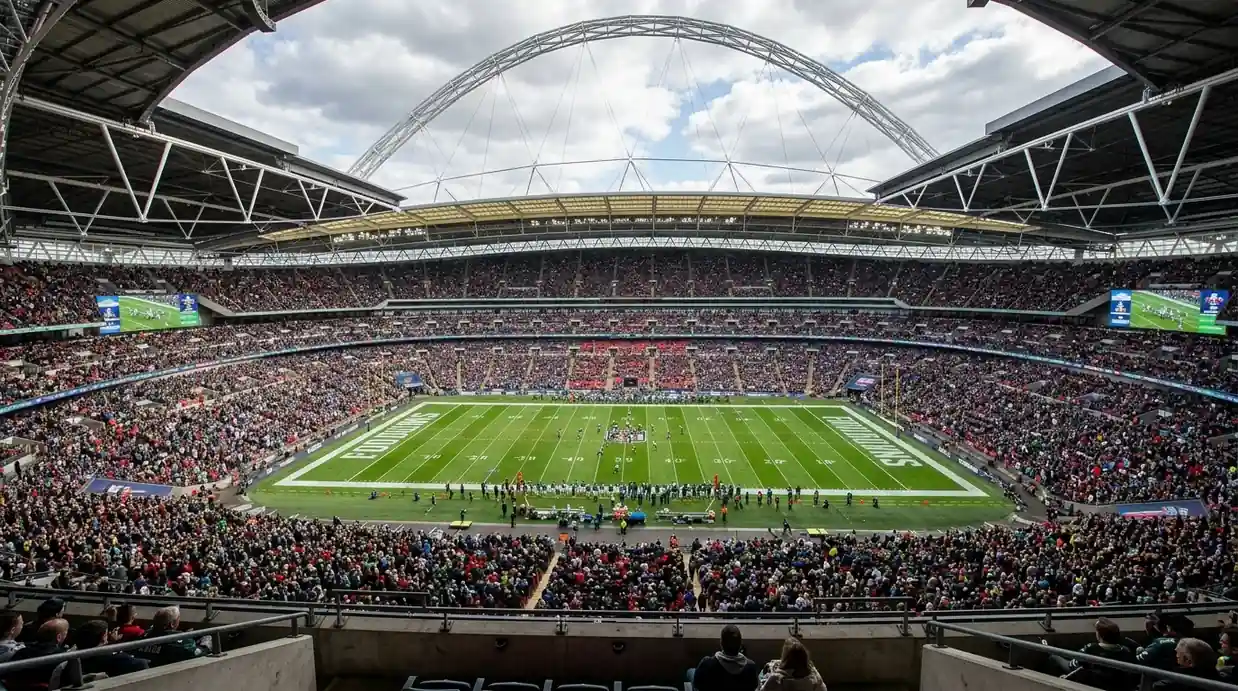
The 2025 season featured a record seven NFL games played outside the United States, and the league has signalled that this number will continue to rise. Goodell himself has said that every team now actively wants to participate in the international programme — a sharp reversal from the early years when franchises treated London trips as an inconvenience. His stated ambition is 16 international games across 16 different markets, with the explicit goal of putting “roots” in each location rather than treating them as one-off exhibitions.
All 32 NFL teams have now been assigned international marketing territories across 21 designated regions worldwide. The UK is the most established of these markets, with multiple franchises actively competing for British fan loyalty through year-round community programmes, merchandise partnerships, and social media engagement.
For UK bettors, London games create a distinct set of analytical angles. The visiting American team has typically crossed five to eight time zones, often arriving less than a week before kick-off. Jet lag research consistently shows that westbound travel (US to UK) disrupts circadian rhythms less than eastbound, but the disruption is still measurable — particularly for teams flying in from the West Coast. Meanwhile, the “home” team in a London game has no genuine home advantage; they are playing in a neutral venue thousands of miles from their own fan base. That dynamic flattens the standard home-field edge that bookmakers build into their lines, and it creates potential value on either side of the spread depending on travel logistics and the specific matchup.
Scheduling context matters enormously. Some teams play their London game after a bye week, giving them extra preparation time. Others are slotted into a London trip mid-schedule, sandwiched between divisional contests that carry far more weight in the playoff race. Motivation is not a stat you can quantify, but it shows up in effort, and effort shows up in margins of victory. I have tracked London game results against the closing spread since 2017, and the pattern is clear: teams with a short turnaround before their London trip have consistently underperformed market expectations.
The practical advantage for UK-based bettors is proximity. You can watch these games at civilised hours, attend in person to gauge atmosphere and conditions, and access pre-match information — weather at the stadium, travel reports, even player demeanour at public events during the week — that American-based bettors simply cannot get first-hand. London games are the one corner of the NFL calendar where being British is a genuine informational edge.
Beyond the Basics: Props, Futures, and Parlays
Once the spread, moneyline, and totals start feeling routine, the NFL opens up a second tier of markets that is where, frankly, the most interesting analytical work happens. Player props, futures, and accumulators each demand a different skill set, and each carries a different risk profile. I spend more of my research time on these markets than on the core three, because that is where pricing inefficiencies tend to linger longest.
Player Props
Bets on individual player performance within a single game: passing yards for a quarterback, rushing yards for a running back, receptions for a wide receiver, or whether a specific player scores a touchdown. These markets reward granular statistical research and matchup analysis far more than general team-level knowledge.
Futures
Long-term wagers placed weeks or months before an outcome is decided: which team wins the Super Bowl, who claims the MVP award, how many regular season games a franchise wins. Futures tie up your stake for extended periods but offer significantly higher odds and the chance to lock in value before the market adjusts to in-season developments.
Accumulators (Parlays)
Combining multiple selections into a single bet where all legs must win for a payout. The appeal is obvious — small stakes, large potential returns. The risk is equally obvious — one wrong leg and the entire bet loses. NFL accumulators work best as a small, disciplined allocation within a broader wagering approach, not as a primary strategy.
Same game parlay (SGP) — a specific type of accumulator where all selections come from a single NFL game. For instance, combining a team to win, a player to score a touchdown, and the total to go over within the same contest. UK bookmakers increasingly offer dedicated SGP builders for NFL fixtures.
The Super Bowl is the pinnacle of all three advanced markets. The American Gaming Association projected a record USD 1.76 billion in wagers on Super Bowl LX in February 2026 — and that estimate covers only the regulated American market. In the UK, Super Bowl night generates a betting spike that rivals domestic cup finals, with bookmakers listing hundreds of prop markets that range from the precise (first touchdown scorer, exact margin of victory) to the eccentric (coin toss result, length of the national anthem). A thorough preparation for Super Bowl betting from a UK perspective is the difference between informed wagering and throwing darts.
Player props deserve particular attention from UK punters because they expose a different kind of edge. The bookmaker’s core business is pricing team-level outcomes efficiently — they have sophisticated models for spreads and totals. Player props, especially for less prominent players or niche statistical categories, often receive less modelling attention, which means the lines can be softer. If you know that a particular running back faces a defence ranked last against the run, and you have tracked that back’s snap share and target volume across recent weeks, you hold information that the opening prop line may not fully reflect.
Futures, meanwhile, are a patience game. The best value on Super Bowl futures typically appears during the offseason — after the draft, before training camp — when public attention is lowest and the market has not yet priced in the latest roster moves. Holding a futures ticket for months requires bankroll discipline and the emotional tolerance to watch your selection lose games without panicking. But the payoff, when it lands, can dwarf anything a single-game bet delivers.
Accumulators are the market type I approach with the most caution. The mathematics work against you: each leg you add multiplies the bookmaker’s edge. That said, a disciplined two-leg or three-leg accumulator built from strong individual opinions can be a reasonable play, particularly if the bookmaker offers accumulator insurance or odds boosts on NFL multi-bets. The trap is chasing six, seven, eight legs for a life-changing payout. That is a lottery ticket, not a strategy.
Strategy Principles for NFL Betting in the UK
Early in my career, I kept a spreadsheet that tracked every NFL bet I placed across an entire season. The exercise was humbling. I was profitable on player props, roughly break-even on spreads, and haemorrhaging money on accumulators I had no business building. Without that record, I would have continued the same losing patterns indefinitely, convinced by selective memory that I was doing better than I was. That spreadsheet became the foundation of everything that followed.
Strategy in NFL betting is not about secret formulas or insider tips. It is about process — repeatable habits that compound over a long season. The principles below are the ones I return to every September, and they apply regardless of your bankroll size or experience level.
Do
- Set a fixed seasonal bankroll before the first Sunday of the regular season and stick to it regardless of early results.
- Compare lines across at least three UKGC-licensed bookmakers before placing any spread or totals bet.
- Focus your wagering on game types and markets where your research gives you a genuine informational edge.
- Track every bet in a simple log: date, game, market, odds, stake, result. Review monthly.
- Adjust stakes based on your assessed edge, not on how much you want to win.
Don’t
- Chase losses by doubling stakes after a losing Sunday. The season is long enough to recover through discipline, not desperation.
- Bet on every game. The NFL gives you 16 fixtures on a typical Sunday; most weeks, your analysis will support a position on three to five at most.
- Rely on public consensus, social media tips, or pre-match television punditry as the basis for a wager.
- Ignore the time zone factor — placing bets while sleep-deprived during Monday Night Football at 1:15am GMT is a recipe for poor decisions.
- Conflate entertainment stakes (fun accumulators, prop novelties) with your analytical bankroll. Keep them separate.

Line shopping is the single highest-value habit a UK NFL bettor can develop. Because the UK market supports multiple licensed operators offering the same games, price discrepancies exist on virtually every fixture. A half-point difference on a spread — getting +3.5 instead of +3 — does not sound dramatic until you realise that NFL games land on the number 3 roughly 15% of the time. Over a full season, that half-point is the difference between a losing record and a profitable one. Research from across the industry suggests that bettors in states with legal wagering watch approximately 19 more NFL games per season than non-bettors, and that engagement breeds the kind of knowledge that translates into sharper line shopping.
Pre-bet routine: seven steps before every NFL wager
- Check the injury report — Wednesday estimates, Thursday upgrades, Friday final designations. A questionable tag on a starting quarterback changes everything.
- Review the spread and totals lines on at least three bookmakers. Note which direction the line has moved since opening.
- Assess the situational factors: short week, cross-country travel, divisional rivalry, playoff implications, weather forecast at kick-off.
- Confirm your edge. Can you articulate, in one sentence, why this bet offers value? If not, it is probably a recreational punt, not an analytical play.
- Set your stake using your standard unit size. No exceptions for “certainties.”
- Place the bet at the best available price. Time your placement — NFL lines often sharpen between Friday afternoon and Sunday morning as sharp money enters the market.
- Log the bet immediately: date, match, market, odds taken, stake, and your one-sentence rationale.
The deeper strategic layer involves situational analysis — understanding the non-statistical factors that move outcomes. A team returning from a London trip faces a unique recovery challenge. A franchise that clinched its division in week 16 may rest starters in week 17, creating a spot where the spread fails to account for motivation. Divisional rematches in the second half of the season play differently from the first meeting because both coaching staffs have 60 minutes of recent film to study. None of these factors appear in basic power rankings, but they consistently influence final margins.
The gap between recreational punters and consistent performers is not talent or inside information — it is process. The punters who treat NFL betting as a structured analytical exercise, with documented routines and honest self-assessment, are the ones who remain active and profitable season after season. A detailed exploration of data-driven NFL betting strategies tailored for UK punters builds on these principles with specific methods for bankroll allocation, value identification, and weekly analytical routines.
UKGC Regulation and Responsible NFL Betting
No one opens a guide about NFL betting hoping to read about regulation. I get it. But I have watched enough people get burned by unlicensed offshore operators — frozen withdrawals, phantom bonus terms, zero recourse — that I cannot, in good conscience, skip this section. The UK Gambling Commission exists to protect you, and recent regulatory changes have made that protection more muscular than ever. Understanding the framework is not optional; it is the foundation on which every other piece of advice in this guide rests.
UKGC licensing in practice: Every bookmaker operating legally in the UK holds a licence issued by the Gambling Commission. This licence mandates segregated customer funds, transparent terms, dispute resolution procedures, and compliance with responsible gambling requirements. If an operator is not UKGC-licensed, they have no legal right to serve UK customers, and you have no legal protection if something goes wrong.
The 2025-26 regulatory cycle has brought significant changes. From April 2025, online slot stake limits took effect: GBP 5 per spin for customers aged 25 and over, and GBP 2 per spin for those aged 18 to 24. While these limits apply to slots rather than sports betting directly, they signal the Commission’s willingness to impose hard behavioural constraints, and the direction of travel suggests sports-specific measures could follow. Alongside stake limits, a new statutory levy on gambling operators came into force — ranging from 0.1% to 1.1% of gross gambling yield — funding research, prevention, and treatment of gambling harms. Tax receipts from betting and gaming for the April-to-August period of the 2025-26 financial year reached GBP 1,786 million, up 9% year on year, which tells you both that the industry is growing and that the government is actively capturing a share of that growth to fund harm reduction.
Helen Rhodes, the Gambling Commission’s Director of Major Policy Projects, has pushed back against what she described as “ill-informed or inaccurate” commentary around financial risk assessments — the checks that operators must run to identify customers who may be spending beyond their means. John Pierce, the Commission’s Director of Enforcement, has stated that ongoing changes will “strengthen decision-making and streamline the calculation of penalties” for operators who breach the rules. In plain English: the regulator is tightening the screws on operators, and that ultimately benefits the consumer.
For NFL bettors, the practical takeaway is straightforward: stick to UKGC-licensed operators, use the responsible gambling tools they are legally required to provide (deposit limits, reality checks, self-exclusion via GAMSTOP), and treat your seasonal NFL bankroll as a fixed entertainment budget rather than an investment account. The regulatory framework is there to ensure a fair market — make sure you are operating inside it.
Frequently Asked Questions
Is it legal to bet on the NFL in the UK?
Yes. Any bookmaker holding a valid licence from the UK Gambling Commission can legally offer NFL betting markets to customers in the United Kingdom. The NFL is treated like any other sport within the UKGC framework — there are no restrictions specific to American football. The key is to verify that the operator you are using actually holds a UKGC licence, which you can check on the Commission’s public register. Unlicensed offshore operators are not legal in the UK, and using them leaves you without consumer protection.
What are the most popular NFL bet types for UK punters?
The three core markets dominate: point spread (handicap), moneyline (match winner), and totals (over/under). Consumer research shows 61% of NFL bettors prefer the point spread, making it the single most wagered market. Beyond the core three, player props — bets on individual statistical performances such as passing yards or touchdowns scored — have grown rapidly and are increasingly popular among UK punters who enjoy the analytical depth they require. Accumulators combining multiple NFL selections are also a staple of the UK betting culture applied to American football.
How do American odds convert to fractional odds?
For positive American odds (e.g. +175): divide the number by 100 to get the fractional profit per unit staked. +175 becomes 175/100, which simplifies to 7/4. For negative American odds (e.g. -150): the number tells you how much you need to stake to win 100. -150 means you stake 150 to win 100, which converts to 100/150, simplified to 2/3. Most UK bookmaker sites allow you to switch between fractional, decimal, and American formats in your account settings, so you can always view NFL odds in your preferred format.
When does the NFL season start and end?
The NFL regular season begins in early September and runs through the first week of January, spanning 18 weeks with each team playing 17 games. The playoffs start in mid-January with the Wild Card round, followed by the Divisional round, Conference Championships, and the Super Bowl in early February. Preseason games take place in August but carry no competitive significance and are poor value for most betting purposes. Futures markets for the following season typically reopen within weeks of the Super Bowl.
Can I bet on NFL London games?
Absolutely, and London games present some of the most interesting betting opportunities of the season for UK-based punters. All UKGC-licensed bookmakers offer full market coverage on International Series fixtures, including spreads, totals, player props, and in-play markets. The unique travel dynamics, neutral venue factor, and UK-friendly kick-off times create analytical angles that are less accessible to American bettors. The 2025 season featured a record seven international games, with London fixtures attracting up to 86,152 spectators and record television audiences.
Do UK bookmakers offer the same NFL markets as American sportsbooks?
The core markets — spread, moneyline, totals, and major player props — are consistent across UK and US platforms. Where the differences emerge is in depth and presentation. American sportsbooks tend to offer more granular micro-markets (e.g. drive-by-drive results, quarter-specific props) and a wider range of same game parlay combinations. UK bookmakers, on the other hand, often provide accumulator insurance, enhanced odds promotions, and free bet offers tied to NFL that have no direct equivalent in the American market. The gap is narrowing every season as UK operators invest more heavily in their NFL product.
Is NFL betting growing in the United Kingdom?
Every available indicator points to sustained growth. The UK has an estimated 13 million American football fans, the NFL’s London games drew record viewership and attendance in 2025, and the league is expanding its international schedule. The broader UK sports betting market is projected to grow from USD 11.2 billion in 2024 to USD 21.3 billion by 2030, and American football is capturing an increasing share of that expansion. The Kansas City Chiefs alone generate 50,000 search queries per month from UK users — a single team driving search volume that rivals some domestic football clubs outside the top flight.
Created by the ”Sports Betting nfl” editorial team.