NFL Live Betting UK: In-Play Wagering Strategies
 Available in US
Table of Contents
- Navigating NFL In-Play Betting on UK Platforms
- NFL Live Betting Markets: What You Can Wager Mid-Game
- Late Kick-Offs and UK Time Zones: Managing the NFL Live Schedule
- NFL Live Streaming and Betting: Which UK Sites Offer Both
- In-Play Tactics: Exploiting Momentum Shifts in NFL Games
- Using Cash Out in NFL Live Betting
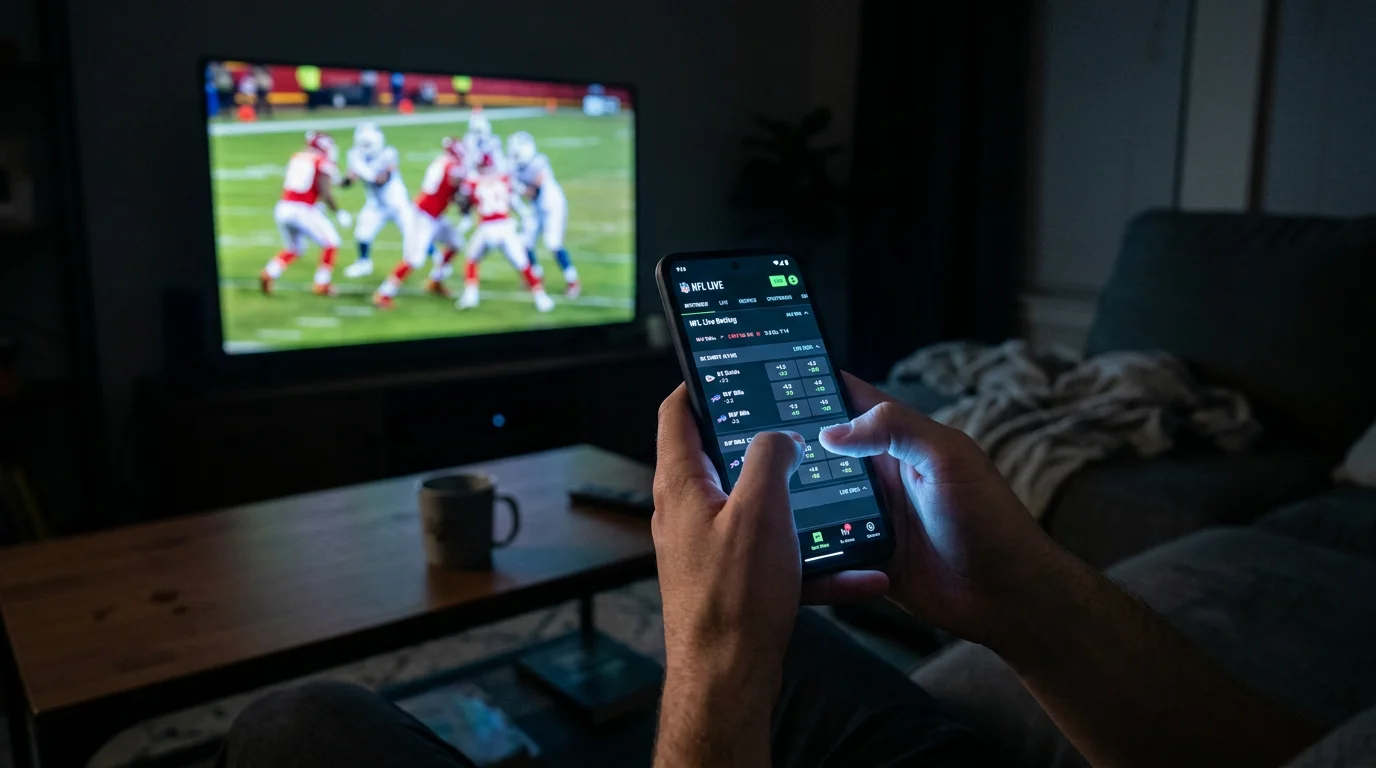
The first time I placed a live NFL bet from my flat in London, I was three beers into a Sunday evening and the Kansas City Chiefs had just thrown a pick-six to fall behind by fourteen points. The in-play spread had swung wildly, the Chiefs were suddenly underdogs at +7.5, and I backed them on impulse. They came back and covered with room to spare. I felt like a genius — right up until the following week when the exact same “instinct” cost me twice as much on a game where the momentum never swung back.
That experience taught me everything that matters about NFL live betting in one weekend: it rewards preparation and punishes gut reactions. In-play wagering on American football is genuinely different from live betting on the sports UK punters know best. Football matches flow continuously; NFL games stop, start, reset, and shift in discrete chunks. Each change of possession is a new situation, each timeout a recalibration point, each quarter break a reset of the market’s entire model. The NFL generates the largest betting handle of any US league despite having fewer than 300 regular-season games — and a growing share of that volume comes from in-play markets where the odds are recalculated after every snap.
For UK bettors, in-play NFL presents specific challenges beyond the sport itself. The time zones mean the bulk of the action happens between 6 pm and midnight GMT on a Sunday, which is either perfect or punishing depending on your Monday schedule. The streaming landscape is fragmented. The cash-out mechanics interact with American football’s scoring patterns in ways that differ from any other sport. This guide works through all of it — from how the markets function mechanically to the tactical edges available if you approach live NFL betting with a plan rather than a pint.
When momentum shifts unexpectedly during a game, utilizing NFL cash out options can help you secure profits or minimize losses.
Navigating NFL In-Play Betting on UK Platforms
If you have ever tried to place a live bet during a Premier League match, you already understand the basic mechanics: the odds change in response to what is happening on the pitch, and you are betting against a moving target. NFL in-play operates on the same principle but with a structural difference that fundamentally changes the experience. American football is a series of discrete plays separated by huddles, timeouts, and breaks. Each of those pauses gives the bookmaker’s algorithms time to recalculate, which means the lines update in clear steps rather than the continuous drift you see in football or tennis.
On a UK platform, the in-play NFL section looks much like any other live betting interface — a match centre showing the score, game clock, down and distance, and current field position, surrounded by available markets with fluctuating odds. What catches newcomers off guard is the speed at which markets suspend and reopen. During an active play, most markets lock. The ball is snapped, the play unfolds over five to ten seconds, the whistle blows, and the markets reopen at new prices reflecting whatever just happened. A fifteen-yard completion moves the spread by less than a point. A touchdown flips it entirely. A turnover can shift the live moneyline by several hundred points in American odds, which translates to dramatic swings in the decimal or fractional formats UK sites display.
The delay between a play ending and the market reopening is where the experience diverges from pre-match betting. On UK platforms, there is typically a lag of five to fifteen seconds while the system recalculates. During that window, the “place bet” button is greyed out or the odds flash to indicate they are being updated. This is not a glitch — it is the system catching up to the new reality. Punters who have bet live on cricket or rugby will recognise this pattern, but the frequency is higher in NFL because there are more discrete events per minute of game time than in most continuous-flow sports.
The markets you can access in-play are a subset of what was available pre-match. The exotic props — player-specific yardage totals, exact scores, first touchdown scorer — tend to close at kick-off or shortly into the first quarter. What remains are the core markets: live spread, live moneyline, live total points, and sometimes quarter-specific or half-specific lines. Some UK operators have expanded their in-play NFL offerings in recent seasons, adding next-drive markets (will the team score on this possession?) and next-play markets (pass or run?), though these are not yet universal.
One mechanical detail worth noting: the vig on in-play markets is typically wider than pre-match. Where a pre-match spread might be priced at 1.91/1.91 in decimal odds (roughly even money on both sides), the in-play equivalent might sit at 1.87/1.87 or even 1.83/1.83 during volatile periods. The bookmaker is compensating for the uncertainty of pricing in real time. This wider margin means your edge needs to be correspondingly larger to justify a live bet versus a pre-match position. It is not a reason to avoid in-play entirely, but it is a reason to be selective.
NFL Live Betting Markets: What You Can Wager Mid-Game
A friend of mine who had never watched American football sat down during a Super Bowl party and asked me, “What can you actually bet on while this is happening?” The honest answer surprised both of us — it was a longer list than I expected, and it has grown every season since.
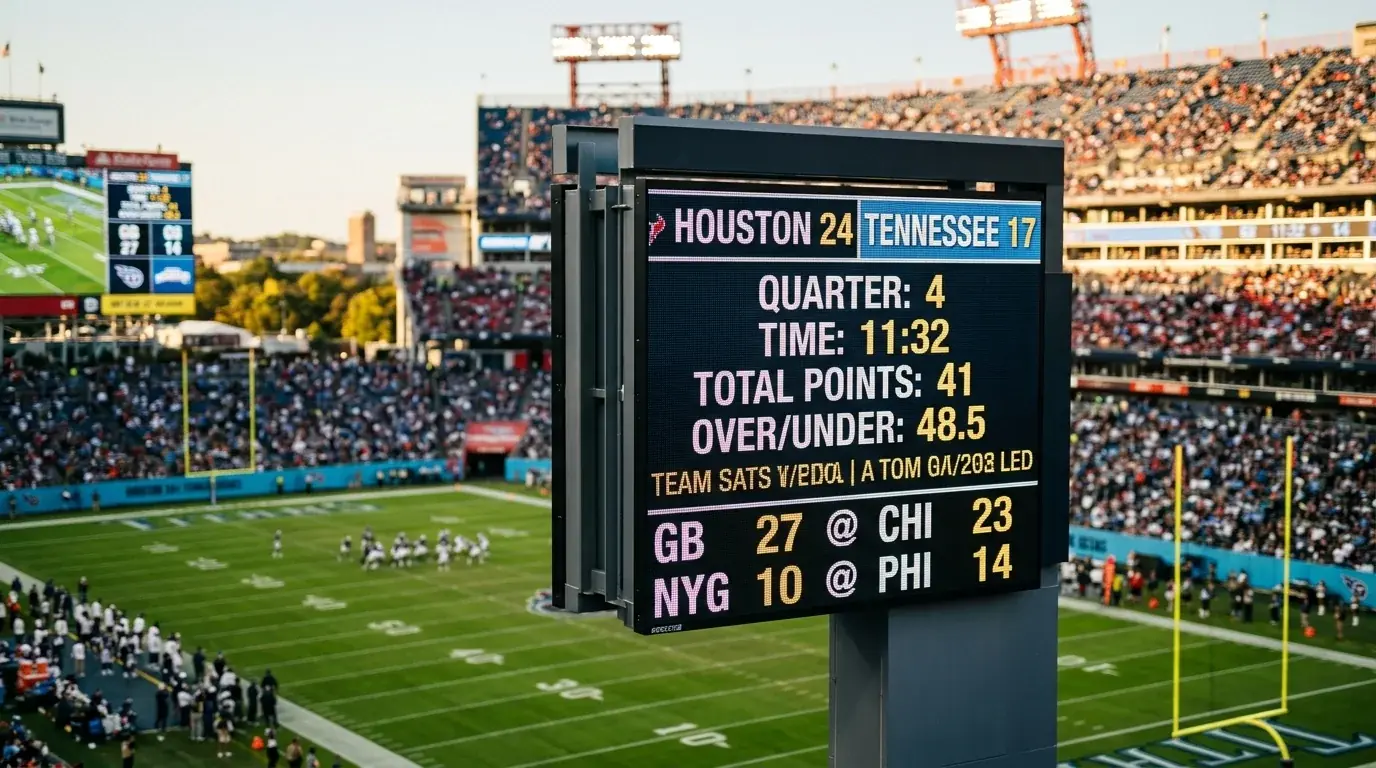
The live spread is the flagship market and the one that attracts the most volume. It works identically to the pre-match spread except the number adjusts continuously based on the score, time remaining, and field position. If a team opened as three-point favourites and they score a touchdown in the first quarter, the live spread might shift to -9.5 or -10, depending on when and how the score occurred. The live spread is the purest expression of the market’s real-time assessment of which team will win and by how much.
The live moneyline strips away the handicap and asks the simpler question: who wins? Early in a game, the moneyline mirrors the pre-match price with minor adjustments. But once a lead opens up — particularly a two-score lead of eight or more points — the moneyline on the trailing team can offer substantial prices. Backing a team at 4.00 (3/1) to come back from fourteen down in the second quarter is not a fantasy in the NFL, where comeback rates from that deficit are higher than in almost any other major sport. The question is whether the price reflects the actual probability or overreacts to the current scoreboard.
Live totals — over/under on total points — behave differently from their pre-match version in a way that catches out punters used to football. In the Premier League, a 0-0 halftime score makes the under look likely. In the NFL, a low-scoring first half often precedes a higher-scoring second half because offensive coordinators make halftime adjustments and conservative early-game play-calling gives way to more aggressive schemes as the clock shrinks. The live total after a quiet first quarter can offer value on the over that the pre-match number did not.
Quarter and half markets are where the in-play NFL offering begins to separate itself from the standard menu. You can bet on the outcome of an individual quarter — spread, total, or moneyline for that fifteen-minute segment alone. These micro-markets appeal to punters who want shorter feedback loops than the full game provides. A second-quarter over bet, for example, settles at halftime regardless of what happens afterward. The pricing on these markets tends to be less efficient than on the full-game equivalent because fewer people specialise in quarter-level analysis, which creates pockets of value for those who do the work.
Drive-result and next-play markets represent the newest frontier, and not all UK bookmakers offer them yet. A drive-result market asks what will happen on the current possession: touchdown, field goal, punt, turnover, or other. A next-play market narrows even further: will the next snap be a pass or a run, and sometimes the yardage gained. These are essentially proposition bets embedded within the live flow of the game, and they appeal to punters who watch closely enough to read formations and tendencies in real time. The skill ceiling is high, the sample size per game is small, and the vig is wide — but for those who genuinely understand offensive playcalling, they represent a rare market where knowledge confers a measurable edge.
Late Kick-Offs and UK Time Zones: Managing the NFL Live Schedule
There is a peculiar ritual that NFL fans in the UK know well: the alarm goes off at 1 am on a Monday morning because you fell asleep during the fourth quarter of the late game and you are not sure whether your bet is still alive. The time-zone challenge is the single biggest practical obstacle to NFL live betting from Britain, and it deserves a clear-eyed strategy rather than the heroic all-nighter approach that burns everyone out by Week 6.
The standard NFL Sunday schedule translates to UK time as follows. The early window kicks off at 18:00 GMT, with the bulk of the games starting simultaneously. The late afternoon window begins at 21:25 GMT, usually featuring two or three games. The Sunday night prime-time game starts at 01:20 GMT — that is, early Monday morning. Thursday Night Football lands at 01:15 GMT on a Friday, and Monday Night Football starts at 01:15 GMT on a Tuesday. The only consistently civilised time slot is the early Sunday window, which aligns neatly with a UK evening.
For live betting, this schedule means your best in-play window is Sunday between 18:00 and roughly 23:00 GMT. During those five hours, you have the early games reaching their second halves and the late games kicking off. The overlap between the two windows — around 21:00 to 22:30 GMT — is the peak period for live NFL action, with multiple games running simultaneously and markets updating across all of them. This is when discipline matters most, because the sheer volume of available bets can lure you into overexposure.
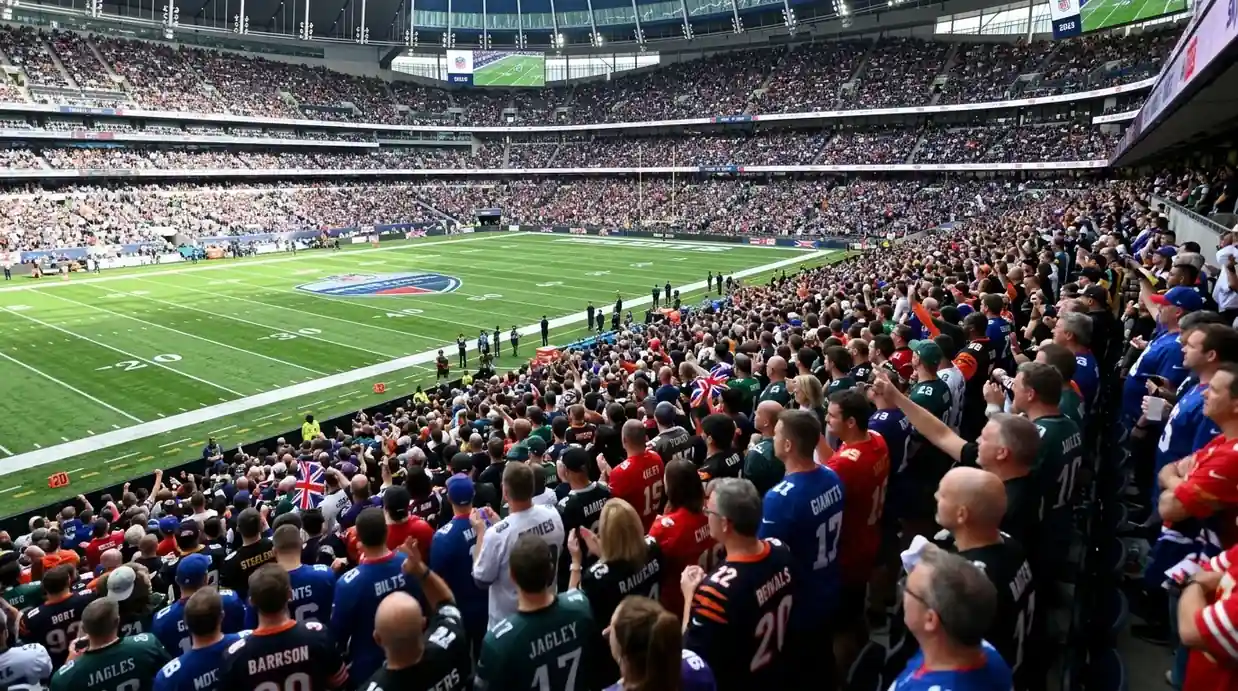
The international games have changed the calculus for UK-based punters. In 2025, the NFL staged a record seven games outside the United States, and those London and international fixtures averaged 6.2 million viewers across the six measured broadcasts — a 32% year-on-year increase that reflects genuine and growing appetite. London games typically kick off at 14:30 or 18:00 GMT, which is prime live-betting territory for anyone in the UK. The atmosphere at Tottenham Hotspur Stadium and Wembley is electric for these events, and the in-play markets for London games tend to be slightly more efficiently priced because the bookmakers expect higher UK volume.
My practical advice is to tier your live-betting engagement by time slot. The early Sunday window gets your full attention and your primary live-betting allocation. The late afternoon window gets a reduced allocation and a stricter filter — only bet live if a clear situational trigger arises, not because you are still awake and fancy another punt. The prime-time and overnight games get zero live-betting allocation unless you have a specific pre-identified scenario you are watching for. Record the game and review it the next morning if you need to analyse it for future weeks. Your bankroll will outlast the season; your body will not if you are routinely up past 1 am on a work night.
NFL Live Streaming and Betting: Which UK Sites Offer Both
Can you actually watch an NFL game on the same platform where you are placing your bets? The answer is more complicated than it should be, and it has changed enough in recent seasons that whatever you read last year is probably outdated.
The streaming landscape for NFL in the UK is split between dedicated sports broadcasters and the bookmakers themselves. Sky Sports holds the primary broadcast rights for live NFL games in the UK, showing multiple games each Sunday plus the Thursday and Monday night fixtures. NFL Game Pass, rebranded and restructured periodically, offers an alternative with a broader selection of games. Neither of these is a bookmaker product, which means you are watching on one screen and betting on another — the standard setup for most UK NFL punters.
Some UK bookmakers do offer in-play streaming for selected NFL games, but the coverage is inconsistent and typically limited to one or two games per week rather than the full slate. The streams tend to carry a delay of anywhere from five to thirty seconds relative to the live broadcast, which matters enormously for in-play betting. If you are watching on a delayed stream and the bookmaker’s odds update based on the live feed, you are effectively seeing the market react to events you have not witnessed yet. This lag turns what should be an informational advantage — watching the game — into a disadvantage if you are chasing odds that have already moved past the event you just saw.
Roger Goodell has said the markets outside the United States are “very, very attractive” and that the league has “pretty good coverage” internationally. That coverage, from a UK live-betting perspective, is adequate for following the sport but imperfect for the specific purpose of informed in-play wagering. The solution most serious live bettors settle on is a two-screen setup: Sky Sports or Game Pass on the television for the actual broadcast, and the bookmaker’s app on a phone or tablet for placing bets. This avoids the delay problem entirely because you are watching the primary feed, not the bookmaker’s secondary stream.
Online sports betting participation has reached 8% of the UK adult population, and a meaningful portion of that group engages with American sports. The infrastructure to serve them is improving each season, with more operators adding NFL-specific in-play features, match trackers with down-and-distance graphics, and drive-by-drive visualisations that are useful even without a video stream. If you cannot access a live broadcast — perhaps the game you want is not on the Sky Sports schedule that week — these match trackers combined with the bookmaker’s own play-by-play feed can give you enough information to make informed live bets, though they are no substitute for watching the action unfold.
In-Play Tactics: Exploiting Momentum Shifts in NFL Games
Week 12 of last season gave me one of the cleanest live-betting opportunities I have ever seen. A strong defensive team went down 17-0 in the first quarter after two turnovers that were entirely out of character — a fumbled snap and a tipped-ball interception. The live spread had shifted from the pre-match -2.5 to +14.5. The market was pricing in a blowout based on sixteen minutes of atypical play. By the fourth quarter, the team had won outright. That kind of overreaction is where in-play NFL betting creates its sharpest edges.
The core tactic is distinguishing between signal and noise. In a sport with as much variance as American football, early-game results frequently misrepresent the true balance of the teams. A pick-six on the opening drive is worth seven points on the scoreboard but close to zero points of information about which team is better. The live market prices it as though it matters, because the algorithms are score-sensitive by design. Your job as a live bettor is to assess whether the score change reflects a genuine shift in the game’s dynamics or a high-variance event that the market is over-weighting.
Turnovers are the single most overpriced event in live NFL markets. A fumble or interception shifts the score, shifts field position, and often shifts the emotional momentum — but it does not shift the underlying quality of the two teams. If a strong offensive team throws an interception on a tipped pass at the line of scrimmage, the market reacts to the turnover without distinguishing between bad luck and bad play. Betting into that overreaction, by backing the team that turned the ball over, is the highest-percentage in-play tactic available. It does not work every time — sometimes the turnover is a symptom of a broader collapse — but over a season of disciplined application, it is profitable.
Halftime is the most significant tactical reset in any NFL game. Coaching adjustments at the break are more impactful in American football than in any other major sport because the game is scheme-dependent and the halftime window is long enough to install new plays. The 63% of NFL bettors who wager weekly are familiar with the pattern: a team that looked overmatched in the first half comes out with a different defensive alignment or an adjusted passing scheme and the second half plays out completely differently. The live markets at halftime reflect the first-half score and trend, not the adjustments the coaches are making in the locker room. If you can identify teams with coaching staffs known for strong halftime adjustments — and this is something you can track over a season — the halftime window is the single best moment to place a live bet.
Momentum in the NFL is real but shorter-lived than most punters believe. A team that scores three consecutive times looks unstoppable, and the market prices them accordingly. But scoring runs in American football are frequently followed by regression — the trailing team adjusts its defensive coverage, the leading team shifts to a more conservative offensive approach to protect the lead, and the game tightens. Fading a momentum-driven line — betting against the team that has just scored multiple times in a row — is counterintuitive but structurally sound, because the market overvalues recent events relative to the full body of evidence.
Stay ahead of the oddsmakers by following the premier American football betting guide for real-time updates.
Using Cash Out in NFL Live Betting
The cash-out button is the most psychologically dangerous feature in any bookmaker’s app, and nowhere is that more true than in NFL live betting. I have watched otherwise disciplined punters cash out winning positions for a fraction of their potential return because the third quarter got uncomfortable, only to see the bet come in twenty minutes later. I have also watched those same punters refuse to cash out a clearly doomed position because “it could still turn around.” Cash out is a tool, not a safety net, and using it well requires rules decided before the game starts.
The mechanics are straightforward: the bookmaker offers you a price to settle your bet before the event concludes. That price reflects the current live odds adjusted for the bookmaker’s margin. If your pre-match bet is in a strong position — the team you backed is leading comfortably — the cash-out offer will be positive but less than the full potential payout. If your bet is losing, the cash-out offer will be a fraction of your original stake. The bookmaker always prices cash out in their favour, which means the mathematical expectation of using it is negative in the long run compared to letting your bets ride to settlement.
That said, there are specific NFL scenarios where cashing out makes strategic sense. The clearest is when new information emerges that was not reflected in your pre-match analysis. If you backed a team whose starting quarterback leaves the game with an injury in the second quarter, the live odds will shift dramatically — but the cash-out offer recalculates with a slight delay that can work in your favour. Cashing out immediately after a significant injury, before the full impact is priced into the live markets, is one of the few situations where the speed advantage favours the punter rather than the bookmaker.
Partial cash out, offered by some UK bookmakers, is a more nuanced tool. Rather than settling the entire bet, you lock in a return on a portion of your stake and leave the rest running. This is useful in NFL games where a team has built a lead but faces a historically strong opponent capable of a comeback. Taking partial cash out at the end of the third quarter — securing some profit while leaving exposure to the full potential payout — is a reasonable middle ground that pure mathematicians might frown at but that practical bettors find psychologically sustainable. The goal of NFL cash-out betting is not to maximise every individual outcome; it is to maintain a process you can stick with across a seventeen-week season.
The rule I follow is simple: decide before kick-off under what conditions I would cash out, and do not revisit that decision during the game. If I wrote “cash out if starting QB is injured” in my pre-match notes, I execute without hesitation. If the condition I identified does not arise, I do not cash out regardless of how the score looks. This removes the emotional element entirely and turns cash out from a panic button into a planned risk-management tool. The punters who lose money on cash out are not the ones who use it — they are the ones who use it reactively, driven by the scoreboard rather than by a pre-defined strategy.
How does NFL live betting work with UK time zones?
The early Sunday window kicks off at 18:00 GMT, with the late afternoon games starting at 21:25 GMT and the prime-time game at 01:20 GMT on Monday. Your best live-betting window is between 18:00 and 23:00 GMT on Sundays, when multiple games run simultaneously. London games, when scheduled, offer the most convenient kick-off times for UK punters, typically at 14:30 or 18:00 GMT.
Which UK bookmakers offer NFL live streaming?
Some UK bookmakers stream selected NFL games in-play, but coverage is inconsistent and typically limited to one or two games per week. The streams often carry a delay of five to thirty seconds relative to the live broadcast, which affects the reliability of in-play betting decisions. Most serious live bettors use Sky Sports or NFL Game Pass for the primary feed and a separate bookmaker app for placing bets.
Can I cash out an NFL in-play bet before the game ends?
Most major UK bookmakers offer cash out on NFL live bets, though it is not available on every market or at every moment during the game. The cash-out offer updates as the live odds change and includes a margin in the bookmaker’s favour. Partial cash out, where you settle a portion of the bet and leave the rest running, is available at some operators and is particularly useful for managing risk in volatile NFL games.
What NFL live markets are available during a game?
The core in-play markets are the live spread, live moneyline, and live total points. Many UK bookmakers also offer quarter and half markets with their own spreads and totals. Some operators have added drive-result markets and next-play markets, though these are not yet universal. Exotic props and player-specific markets generally close at or shortly after kick-off.
Created by the ”Sports Betting nfl” editorial team.