NFL Betting Exchanges UK: Back and Lay Markets
 Available in US
The first time I laid an NFL team — bet against them winning, acting as the bookmaker rather than the punter — was during the 2021 playoffs. I laid the Steelers at 3.40 on an exchange because I believed the market was overvaluing their chances based on name recognition rather than current form. They lost by 21 points. The commission on my winning lay was 2%, and the remaining profit was significantly larger than anything a traditional bookmaker would have offered for the same view. That single trade changed how I approach NFL betting. Roger Goodell has described international markets as “very, very attractive,” and while he was talking about the NFL’s commercial ambitions, the same phrase applies to exchange betting for UK punters willing to learn a different model. With $30 billion wagered legally on the NFL each season, even the fraction that flows through exchange platforms offers genuine opportunity.
Contrasting Betting Exchanges and Traditional Bookmakers
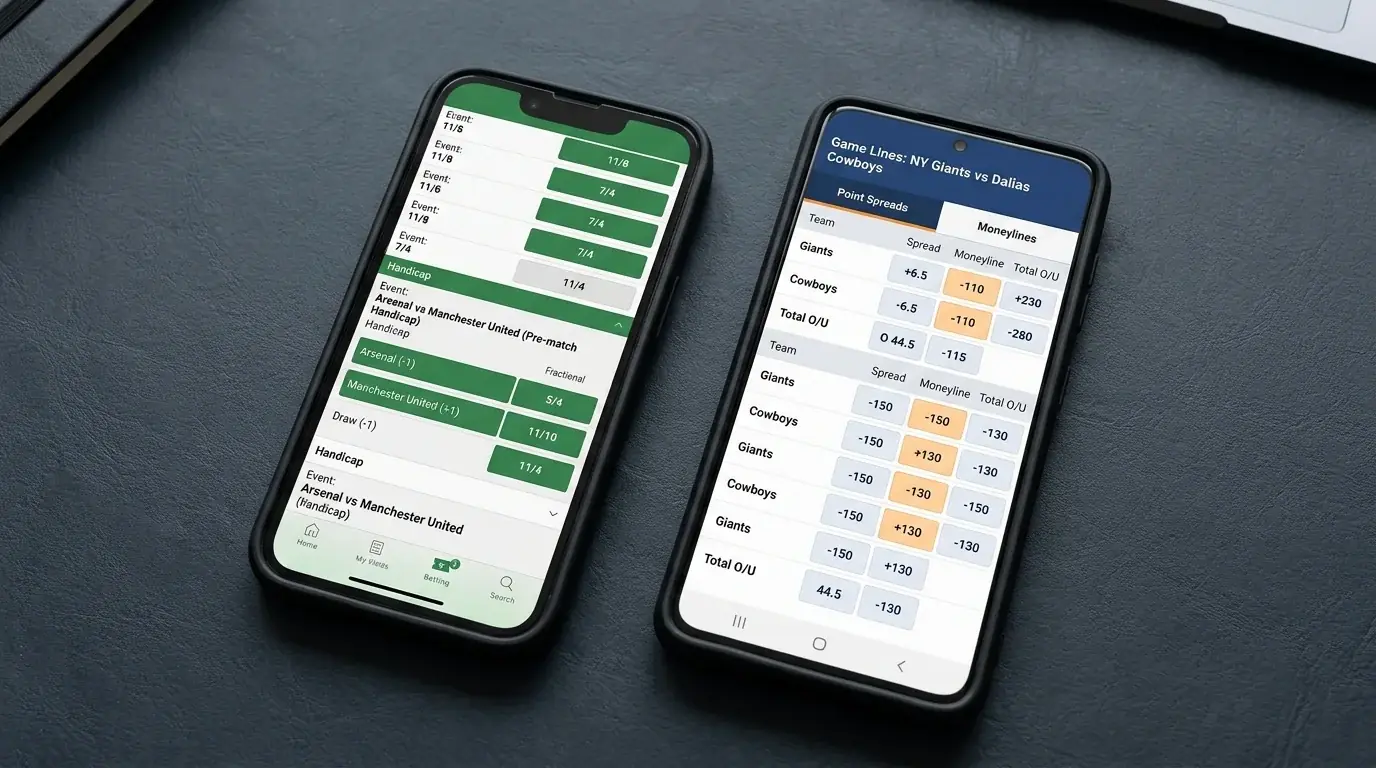
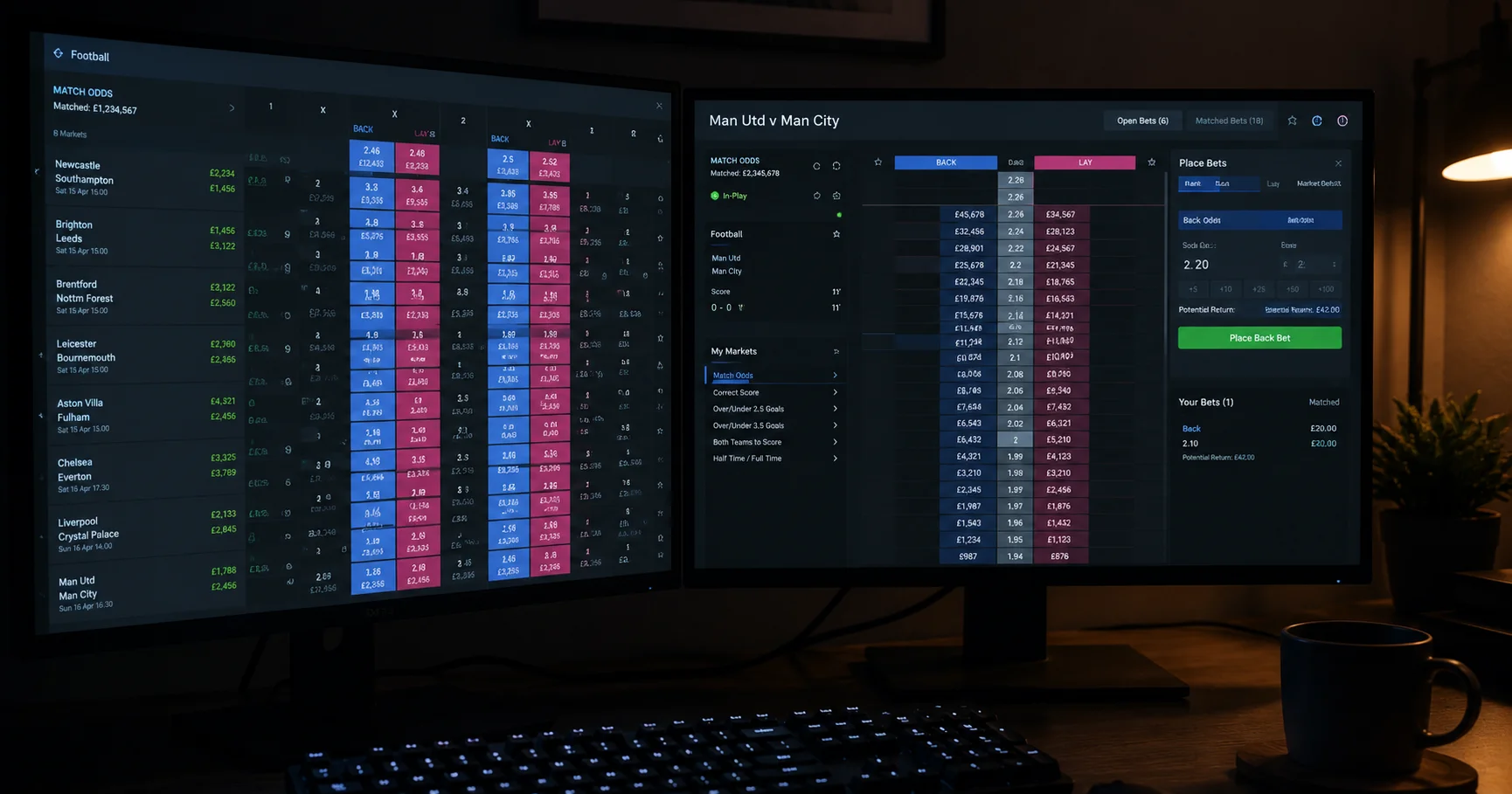
A traditional bookmaker sets the odds, takes your bet, and pays you if you win. The bookmaker’s profit comes from the margin built into the odds — the gap between the true probability and the price offered. An exchange works differently. There is no house setting the odds. You are matched against another bettor. One of you backs (bets for) and the other lays (bets against). The exchange takes a commission on winning bets, typically 2-5%, but does not set the price.
This structural difference produces three practical advantages for NFL bettors. First, odds on exchanges tend to be better than at traditional bookmakers. Because there is no built-in margin on the odds themselves — just the commission on winnings — the effective price is often 2-5% superior. On a point spread bet at even money, a bookmaker might offer 1.91 while an exchange shows 2.00 minus 2% commission, giving an effective price of 1.96. Over a full season of weekly bets, that difference compounds into a meaningful improvement in return.
Second, exchanges let you lay — bet against an outcome. At a traditional bookmaker, if you think the Chiefs will lose, your only option is to back their opponent. On an exchange, you can lay the Chiefs directly, which is a different proposition. Laying allows you to take a position against a specific team without needing to endorse the other side. This distinction matters in games where you have conviction that one team is overvalued but no particular confidence in their opponent.
Third, exchanges enable trading — backing at one price and laying at another to lock in profit regardless of the result. This is closest to financial trading, and it rewards bettors who can anticipate how odds will move before and during a game. If you back a team at 3.00 before kickoff and they score first, their price might drop to 2.20. You lay at 2.20 for the appropriate stake and guarantee a profit no matter who wins.
NFL Liquidity on UK Exchanges: What to Expect
Liquidity — the amount of money available to be matched at a given price — is the exchange bettor’s constant concern, and NFL markets on UK exchanges sit in an awkward middle ground. They are not as liquid as Premier League football, where six-figure sums are matched routinely. But they are not as thin as niche sports where getting a £50 bet matched takes hours.
For NFL match-winner markets, you will typically find reasonable liquidity on marquee games: Sunday afternoon fixtures featuring popular teams, primetime games, and all playoff matches. The NFL generates more betting handle than any American league despite fewer than 300 regular-season games, and that concentrated interest means the biggest fixtures attract sufficient exchange activity for most UK bettors to get their bets matched.
Where liquidity drops off sharply is in secondary NFL markets. Point spreads on exchanges are thinner than match-winner markets. Totals are thinner still. Player props are essentially nonexistent on most UK exchange platforms. If your NFL betting strategy relies on spread or totals analysis, you may find that the best prices sit on exchanges but the available volume does not support your stake size. The practical workaround is to use exchanges for match-winner bets where liquidity is sufficient and traditional bookmakers for spreads and totals where you need guaranteed execution.
Timing affects liquidity significantly. NFL lines open on Tuesday or Wednesday, but exchange volume builds slowly until Friday and peaks on Sunday morning UK time, just before the early games kick off. If you want to place a meaningful exchange bet, Sunday morning is your window. Attempting to trade during the game is possible on major fixtures but requires fast execution and tolerance for partial matches.
Exchange Strategies for NFL: Trading and Laying
My primary exchange strategy for the NFL is pre-game laying of public favourites in primetime games. Thursday Night, Sunday Night, and Monday Night Football attract disproportionate public money on the favoured team, which pushes their back price down and their lay price up. By laying the favourite before kickoff, I am positioning against the weight of casual money, and the commission structure of the exchange means I keep more of my profit than a bookmaker would allow.
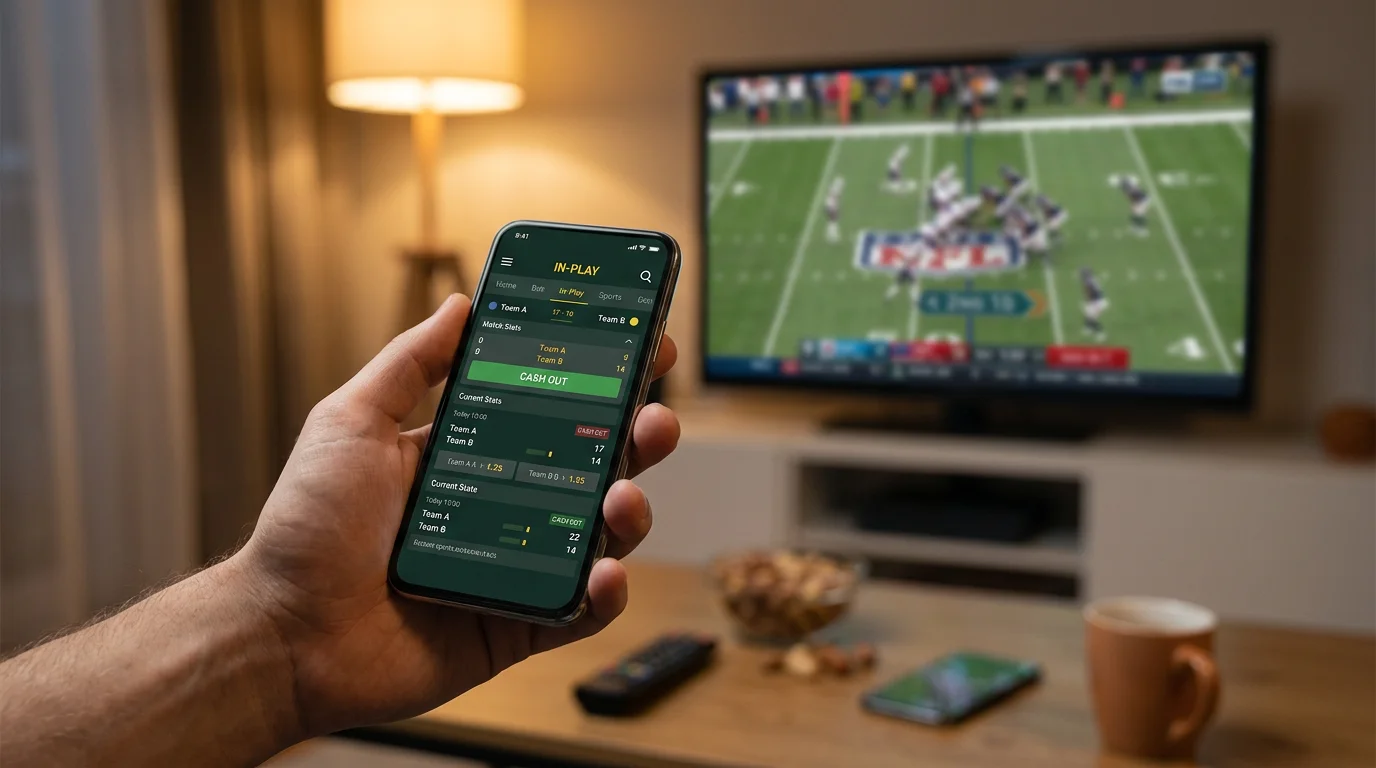
A second approach is in-play trading around scoring events. NFL games are structured in a way that produces frequent momentum shifts — a touchdown changes the dynamic immediately, and odds react sharply. If you have laid a team and they concede a touchdown, their odds lengthen, allowing you to back them at a higher price and lock in a green book. The reverse works too: back a team pre-game, wait for them to score, and lay at the shorter price. The risk is that NFL scoring is volatile. A team can go from down 14 to up 7 in a single quarter, and if you are caught on the wrong side of a momentum swing without an exit, the loss can be larger than a simple single bet.
The discipline required for exchange trading is different from traditional betting. You need price targets, not just team opinions. Before every game I trade, I set a back price, a lay price, and a stop-loss point. If my back reaches the target lay price, I trade out. If it moves against me to the stop-loss, I exit at a controlled loss rather than hoping for a reversal. This structure borrows from financial trading, and it is the only approach I have found that prevents emotional decision-making during live NFL action. For a broader look at which UK bookmakers and platforms offer exchange access alongside traditional sportsbook markets, the main betting sites guide covers the current landscape.
Can I lay NFL bets on UK exchanges?
Yes. UK-based betting exchanges allow you to lay NFL teams, meaning you bet against a specific outcome. You set the odds you are willing to offer, and if another bettor matches your lay, the bet is live. You profit if the team loses, and you pay out if they win, minus the exchange commission.
Is exchange commission lower than bookmaker margins for NFL?
In most cases, yes. Exchange commissions on winning bets range from 2-5%, while traditional bookmaker margins on NFL markets typically run 5-8% or higher. The net effect is better odds on exchanges, though you must account for potential liquidity limitations on less popular NFL fixtures.
Created by the ”Sports Betting nfl” editorial team.