NFL First Touchdown Scorer Odds UK: How This Popular Market Works
 Available in US
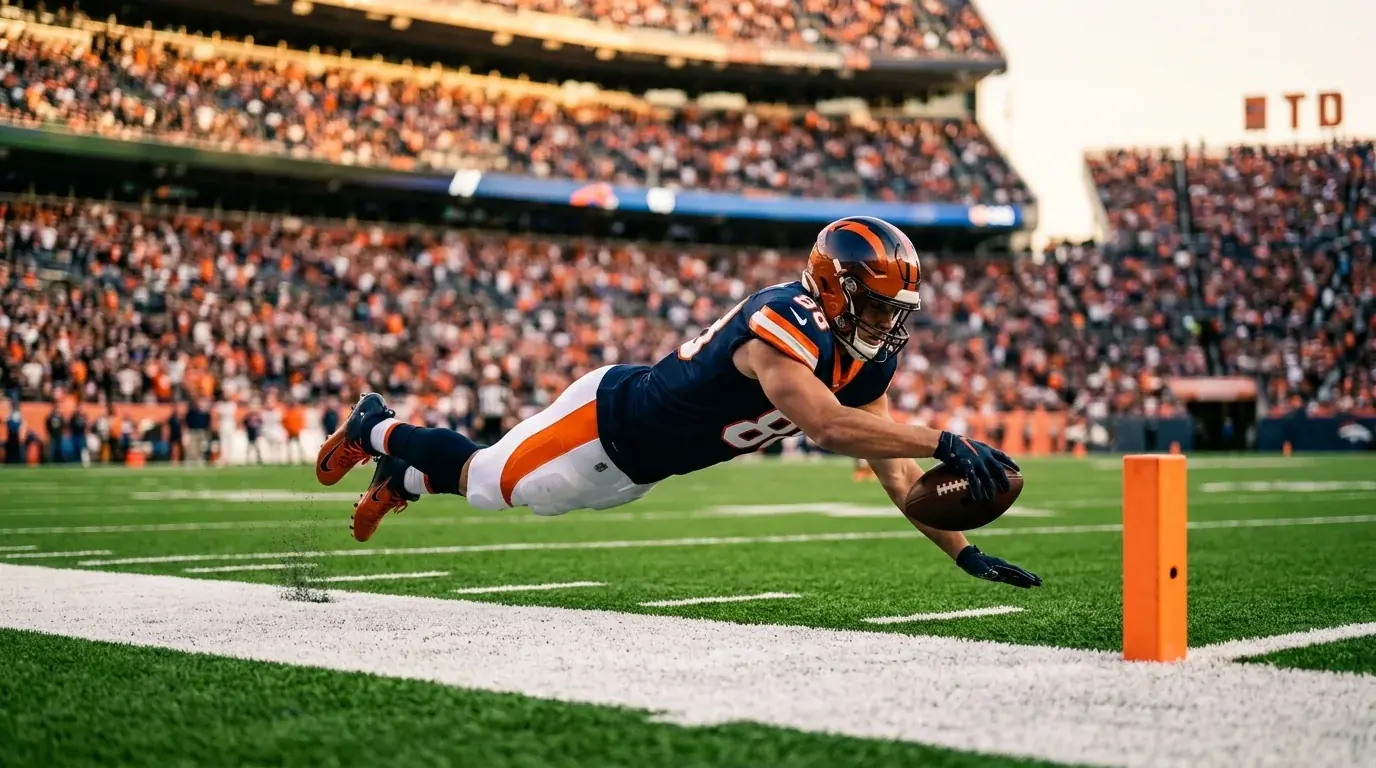
There is something uniquely thrilling about watching the opening drive of an NFL game when you have a fiver on a player to score the first touchdown. Every snap feels loaded with possibility, every red-zone play has your full attention, and when your man punches it in from the two-yard line you feel like you cracked a code. It is the kind of bet that turns casual viewers into fully engaged punters, and UK bookmakers know it — first touchdown scorer is one of the most prominently marketed NFL props on every British platform.
Sixty-three per cent of NFL bettors place at least one wager every week of the season, and touchdown scorer markets account for a meaningful chunk of that weekly action. The appeal is straightforward: you are betting on a specific outcome involving a specific player, which feels more personal and more exciting than backing a three-point spread. But the simplicity of the concept masks a surprisingly complex pricing structure, and understanding how bookmakers set these odds is the difference between entertainment and genuine edge.
I have been betting touchdown scorer markets since my first NFL season, and I still find edges that sharper bettors overlook. The key is knowing where to look — and where to avoid looking.
First, Last, and Anytime Touchdown Scorer: Markets Compared
UK bookmakers typically offer three variants of touchdown scorer betting for NFL, and confusing them is easier than it should be. First touchdown scorer is the headline market: you pick the player who will score the game’s opening touchdown. Last touchdown scorer mirrors the concept but for the final score of the match. Anytime touchdown scorer is the broadest option — your player just needs to reach the end zone at any point during the game, regardless of when.
Pricing differs sharply across the three. First touchdown scorer odds are the longest because the outcome depends on which team receives the opening kick-off, whether they sustain a scoring drive, and whether the specific player you picked gets the goal-line carry or the end-zone target. A running back who averages a touchdown per game might be priced at 8/1 or higher to score first, whereas the same player sits at 2/1 or shorter in the anytime market. The gap reflects the added randomness — you are not just betting on a player’s scoring ability, you are betting on sequencing.
Last touchdown scorer is the least popular of the three, and the margins reflect it. Bookmakers widen the overround because the volume is lower and the outcome is harder to model. Late-game touchdowns depend heavily on game state: a team trailing by three scores in the fourth quarter will be throwing aggressively, which shifts touchdown probability toward wide receivers and away from running backs. Predicting that game state before kick-off is a tall order, and the prices rarely compensate you adequately for the uncertainty.
Anytime touchdown scorer is where most of my action goes. The margins are still wider than on spread or totals bets — bookmakers price it as a recreational market — but the outcomes are more predictable because you only need your player to score once in sixty minutes. A running back with a 55 per cent touchdown rate over the season has a quantifiable probability, and comparing that to the implied probability in the odds reveals whether the price is worth taking. That is the foundation of finding value here, and it applies whether you are betting a single game or folding a touchdown scorer leg into a same-game parlay.
How to Pick NFL Touchdown Scorers: Red-Zone Stats and Targets
Red-zone efficiency is the single most important stat for touchdown scorer betting, and it is surprising how many bettors ignore it. A player’s total yardage, reception count, or highlight-reel catches mean nothing if he is not involved when the offence reaches the 20-yard line. The players who score touchdowns consistently are the ones who see targets or carries inside the red zone on a high percentage of their team’s trips there.
I track two numbers for every potential selection: red-zone target share for receivers and tight ends, and red-zone carry share for running backs. A wide receiver who commands 30 per cent of his team’s red-zone targets is a fundamentally different proposition from one who sits at 12 per cent, even if their overall stat lines look similar. The former is the designated end-zone threat; the latter is a secondary option who happens to catch passes elsewhere on the field.
Goal-line usage matters even more. Inside the five-yard line, offences simplify. The playbook shrinks to a handful of high-percentage designs, and the players who get the ball in those situations tend to be the same ones week after week. A running back who receives 60 per cent of his team’s carries inside the five is a near-automatic inclusion on my touchdown scorer shortlist — his role is essentially to convert short-yardage situations into points. Sixty-one per cent of NFL bettors focus on spread markets, which means the sharper analytical attention is concentrated elsewhere and the touchdown scorer lines sometimes lag behind the latest usage data. That lag is your edge.
Matchup context filters the shortlist further. An offence facing a top-five red-zone defence scores touchdowns less frequently, which suppresses everyone’s probability. Conversely, a defence that allows touchdowns on 65 per cent of opponent red-zone trips inflates the odds of any skill player finding the end zone. Combining player-level usage with defensive red-zone efficiency gives you a more accurate implied probability than the bookmaker’s line often reflects.
Finding Value in Touchdown Scorer Markets on UK Bookmakers
The overround on first touchdown scorer markets can exceed 150 per cent on some UK bookmakers. That is a staggering margin, and it means you are fighting a serious headwind on every bet. Anytime touchdown scorer markets are tighter — typically 115 to 130 per cent — but still wider than the 104 to 108 per cent you see on spreads and totals. Accepting that reality is the first step toward betting these markets profitably, because it means you need to be highly selective.
I limit my touchdown scorer bets to two or three per week, targeting only the situations where my calculated implied probability exceeds the bookmaker’s implied probability by at least ten percentage points. That threshold sounds aggressive, but it is necessary to overcome the margin. A player I assess at a 50 per cent chance of scoring anytime needs to be priced at roughly Evens or longer for the bet to qualify. If the bookmaker offers 4/6, the overlay is not large enough to compensate for the built-in house edge.
Timing also influences value. Lines for Thursday Night Football or the early Sunday games open by midweek, and early prices can be softer before public money sharpens them. I have noticed that UK bookmakers adjust touchdown scorer odds less aggressively than spread or totals lines, presumably because the recreational nature of the market means the money is more diffuse. Placing your bets early in the week, after Tuesday injury reports but before the Friday rush, often captures the best prices.
One final note: do not underestimate tight ends and pass-catching backs in these markets. The public fixates on marquee wide receivers and star running backs, which compresses their odds. Meanwhile, a tight end who sees four red-zone targets per game might be priced at 5/1 to score anytime because his name does not generate the same casual interest. Those overlooked players are where I have found the most consistent value over multiple seasons.
Frequently Asked Questions
What odds do first touchdown scorers typically have on UK sites?
First touchdown scorer odds on UK bookmakers generally range from 6/1 to 20/1 depending on the player’s role and the matchup. A featured running back on a run-heavy offence might sit around 6/1 to 8/1, while a secondary wide receiver or tight end could be priced at 14/1 or longer. The wide range reflects the randomness of which player scores first — even the most likely candidate rarely has a true probability above 12 to 15 per cent.
Can a defensive player be the first touchdown scorer in NFL betting?
Yes. Defensive and special-teams touchdowns — interception returns, fumble recoveries, punt or kick-off returns — all count in first touchdown scorer markets. Most UK bookmakers list a small selection of defensive players alongside the offensive skill positions, though the odds are extremely long, often 33/1 or higher. If a defensive touchdown is scored by a player not listed in the market, the bet is typically voided and stakes returned, but always check the specific settlement rules on your bookmaker’s site.
Prepared by the Sports Betting nfl editorial staff.