Super Bowl Betting UK: Odds and Market Strategies
 Available in US
Table of Contents
- Popular Super Bowl Betting Markets for UK Punters
- From Wild Card to Super Bowl: How the Playoff Path Shapes Odds
- Super Bowl Prop Bets: From MVP to the Coin Toss
- When to Place Your Super Bowl Bets: Timing and Value
- The Super Bowl Night in the UK: Viewing, Betting, and Time Zones
- What Past Super Bowls Teach UK Bettors About Value
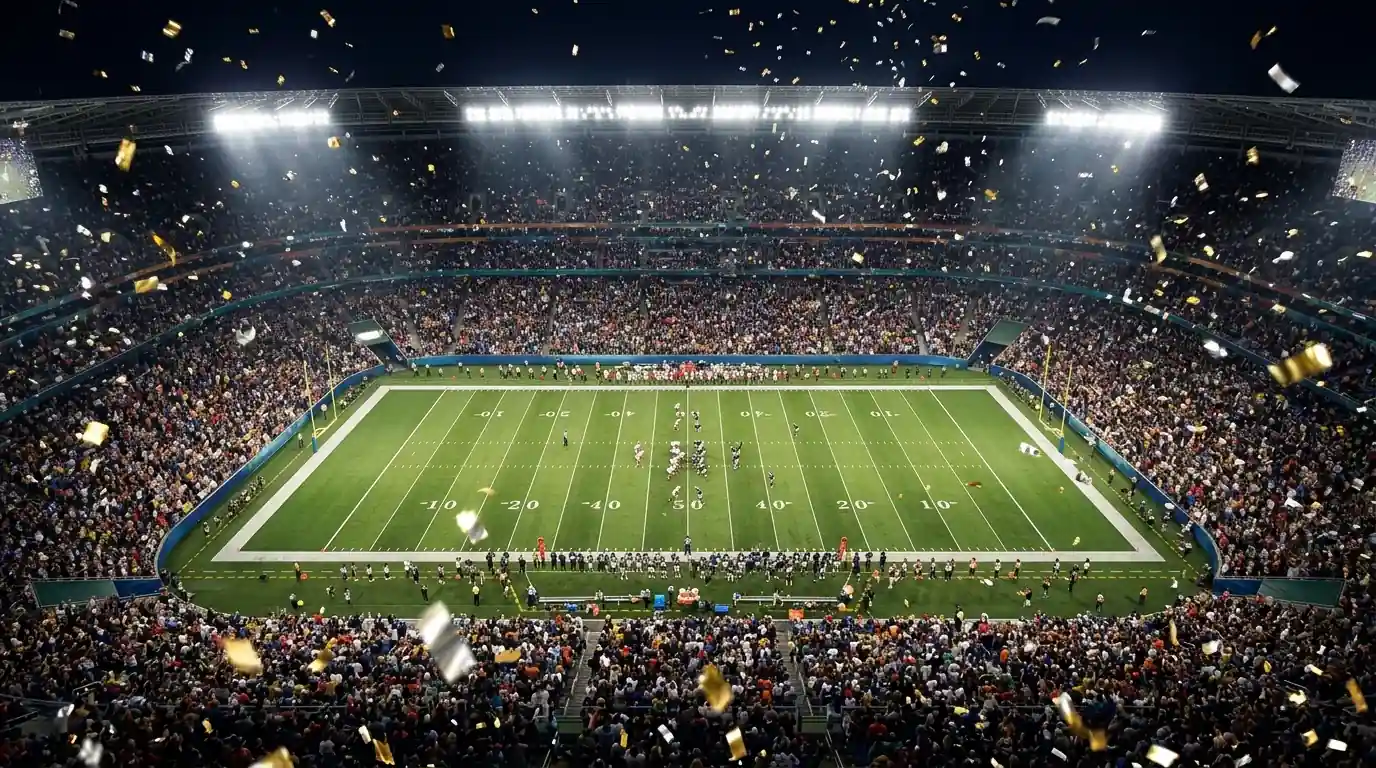
A record $1.76 billion was expected to be wagered on Super Bowl LX in February 2026. That figure — from a single game played over four hours on one Sunday evening — dwarfs the total handle on most entire sporting tournaments. The Super Bowl is not just the NFL’s championship; it is the largest single-event betting market on the planet, and UK punters have full access to it through every major UKGC-licensed bookmaker.
I have bet on every Super Bowl for the past nine years, and I can tell you that the experience for UK bettors has transformed in that time. When I placed my first Super Bowl wager, the market options on UK sites were limited to the match winner, the spread, and the total. Today, you can bet on the MVP’s passing yards, the colour of the Gatorade shower, and whether the first score will be a safety — all from the same bet slip. The depth of markets is now comparable to what American sportsbooks offer, and in some areas the UK operators have gone further with bet-builder tools that let you construct bespoke multi-leg wagers.
This guide covers the full landscape of Super Bowl betting as it applies to UK punters in 2026: the markets, the playoff context that shapes the odds, the timing strategies that create value, and the unique experience of following the game from British time zones. Whether you are planning your first Super Bowl bet or your fiftieth, the goal is to arm you with the analysis and structure to approach the biggest game of the year with clarity rather than noise.
If you are looking at the AFC favorites, analyzing the Kansas City Chiefs Super Bowl odds provides a great baseline for the upcoming playoffs.
Popular Super Bowl Betting Markets for UK Punters
The Super Bowl market list on a typical UK bookmaker site runs to 300 or more individual betting options by game day. That number can feel overwhelming if you are used to the 30-odd markets available on a regular-season game. Understanding the structure behind those markets makes the volume manageable.
The core markets are the same three you see every week: moneyline (who wins), point spread (by how much), and total points (over/under the bookmaker’s projected combined score). These attract the most volume and offer the tightest margins. On Super Bowl Sunday, the overround on the main spread market typically drops below 4% as bookmakers compete for the massive influx of recreational money. That compression benefits bettors — the vig on the biggest game of the year is often lower than on a random Week 7 matchup.
The Super Bowl generated 68 million American bettors for the LIX edition alone, and that appetite for action is what drives bookmakers to create an extraordinary range of side markets. Team props include first team to score, total touchdowns per team, total sacks, and whether either team will score in every quarter. Game props cover the first scoring method (touchdown, field goal, safety), the total number of turnovers, whether the game will go to overtime, and the margin of victory broken into bands. Scoring props might ask whether the total combined score will be odd or even, or whether any quarter will be scoreless.
Player props are where the market depth truly explodes. For the two starting quarterbacks, UK bookmakers typically offer lines on passing yards, passing touchdowns, interceptions, completions, longest completion, rushing yards, and passer rating. For skill-position players — running backs, wide receivers, tight ends — you will find rushing yards, receiving yards, receptions, and anytime or first touchdown scorer markets. Even defensive players are represented, with sack totals and interception props available on the most aggressive UK operators.
Specials and novelty markets round out the list. The Gatorade colour, the length of the national anthem, the coin toss result, and the first song at the halftime show are all bet-able on most major UK sites. These markets carry wide margins and are pure entertainment — the bookmaker’s edge on a coin-toss bet, which should be evens, is typically 8% to 10%. I treat them as what they are: fun, not analysis. If you want to put a fiver on the Gatorade being orange, enjoy it. Just do not confuse it with an informed position.
From Wild Card to Super Bowl: How the Playoff Path Shapes Odds
Every Super Bowl is the end point of a four-round playoff bracket, and the path each team takes to get there has a measurable impact on the odds. Ignoring the journey and betting the final game in isolation is one of the most common analytical mistakes I see from UK punters who are new to American football’s postseason.
The NFL playoffs begin with the Wild Card round in mid-January: six games over three days, featuring the lower-seeded qualifiers and the division winners ranked second and third in each conference. The following week, the Divisional round reduces the field to four, and the Conference Championships then determine the two Super Bowl participants. The top seed in each conference earns a first-round bye — they skip the Wild Card round entirely and enter the bracket with a week of extra rest and preparation.
That bye advantage is not trivial. Teams entering the Divisional round with a week off are fresher, healthier, and better prepared. They have had additional days to game-plan specifically for their opponent, whose identity was not known until the Wild Card games concluded. The market prices this advantage into the spread, but it also carries through to the Super Bowl odds. A team that won three playoff games to reach the final has played 180 more minutes of high-intensity football than a team that needed only two games. Fatigue, accumulated injuries, and the emotional toll of close elimination games are all real factors by the time Super Bowl Sunday arrives.
Conference Championship results provide the freshest and most relevant data point for Super Bowl betting. How a team performed in its penultimate game — the margin of victory, the style of play, the health of key players after the final whistle — directly shapes the opening Super Bowl line. A team that dominated its Conference Championship by 20 points will open as a heavier favourite than one that scraped through in overtime, even if their regular-season records were identical. The recency of that performance data makes it disproportionately influential on both the bookmaker’s line and public perception.
For UK bettors, the playoff schedule creates a natural funnel for analysis. Rather than trying to evaluate 32 teams from September, you can focus your Super Bowl preparation on the four teams that survive to Conference Championship weekend. The two weeks between the Conference Championships and the Super Bowl — a gap unique to the NFL calendar — give you a clear window to research matchups, assess injury reports, and identify where the market might be mispricing the final two teams. That gap is your analytical advantage; use it.
Super Bowl Prop Bets: From MVP to the Coin Toss
Props are where the Super Bowl stops being a normal football game and becomes something closer to a festival. I once spent an entire Saturday afternoon before the big game mapping out prop correlations on a spreadsheet — which player touchdown markets correlated with the over on total points, which quarterback passing lines conflicted with each other’s time of possession. It was the most fun I have had with a betting slip, and it is the part of Super Bowl wagering that brings the most newcomers into NFL betting each year.
The MVP market is the marquee prop. The winner is voted on by a panel of media members immediately after the game, and the award almost always goes to the quarterback of the winning team. In the last 20 Super Bowls, the winning quarterback has taken MVP honours in the majority of cases. This makes the MVP market a quasi-proxy for the match winner with a slight twist: if you expect the winning team to dominate on the ground or through defence, a non-quarterback MVP becomes a longer-odds opportunity. Running backs, defensive players, and wide receivers have all won the award when the game’s narrative centred on their performance.
First touchdown scorer is the most popular individual prop among casual bettors, and the pricing reflects that popularity. The favourite to score first is typically priced around 7/1 to 9/1 even when analytical models give them closer to a 12% to 15% probability. The margin is wide because the market is entertainment-driven — people want a name to cheer for on the opening drive. For analytical bettors, the value in this market tends to sit with tight ends and secondary receiving options who see red-zone targets but do not attract the same volume of public money as star running backs and wide receivers.
Yardage and statistical props for the Super Bowl follow the same structure as regular-season player props but with one important difference: sample size. Over an 18-week season, you build a statistical profile of each player’s output range. In the Super Bowl, that profile meets a unique opponent in a unique emotional environment. The quarterback who averaged 265 passing yards per game during the season might throw for 320 in a Super Bowl that turns into a shootout, or 190 in one that is defined by defence and running. The game script — whether a team is playing from ahead or chasing a deficit — influences individual stats more than any single-game factor, and the Super Bowl amplifies that variability because the stakes suppress conservative play in the second half.
Novelty props — coin toss, anthem length, Gatorade colour — are pure variance. The coin toss is a genuine 50/50 event priced at around 10/11 each side, giving the bookmaker a clean 4.5% margin for zero analytical input required. These markets exist because the Super Bowl attracts millions of first-time bettors who want skin in the game from the opening moments. There is no shame in placing one, but there is no edge to find either.
When to Place Your Super Bowl Bets: Timing and Value
When you place your Super Bowl bet matters almost as much as what you bet on. The market for the championship game is open year-round in the form of NFL futures, and the price you get in April looks nothing like the price available in February. Understanding the timing curve is one of the simplest ways to extract value from the Super Bowl market.
Futures markets for the next Super Bowl winner open within days of the current one ending. At that point, the field is wide and the odds are long. Backing a team at 20/1 in March that eventually reaches the Super Bowl as a slight favourite means you captured months of positive information — free-agency signings, a successful draft, a strong preseason — at a price that did not reflect any of it. The trade-off is that your money is locked up for nearly a year, and the team might not make the playoffs at all.
The sharpest value window in my experience is the period between the Conference Championships and Super Bowl Sunday. Once the two finalists are known, the opening line is posted — usually within hours of the conference title games ending. That initial line is set quickly, often under time pressure, and it reflects the market’s immediate emotional response to the games just played. A team that won a dramatic overtime Conference Championship tends to open shorter than its underlying quality warrants, because public sentiment is inflated by recency and narrative. In the 48 hours after the line opens, sharp money corrects the most obvious mispricings, and the line stabilises. Placing your bet during that brief correction window, once you have done your own analysis, has historically offered the best risk-reward balance for Super Bowl wagering.
The worst time to bet the Super Bowl, data consistently shows, is the final 24 hours before kick-off. By then, the market has absorbed every piece of available information, the line is as efficient as it will ever be, and the remaining liquidity is predominantly recreational money chasing narratives rather than value. If you have not placed your Super Bowl bet by Friday evening UK time, the price you get on Sunday is unlikely to compensate you for the delay.
One exception to this timing logic is prop markets. Player props are posted later than the main lines — sometimes as late as Thursday of Super Bowl week — and they are priced with wider margins because the bookmaker faces more uncertainty on individual statistical outcomes. Early prop lines can contain genuine mispricings, particularly on lesser-known players whose role in the game plan has not yet been widely discussed in the media. If you are going to bet Super Bowl props, check the lines as soon as they are posted and act quickly on any that diverge from your analysis.
The Super Bowl Night in the UK: Viewing, Betting, and Time Zones
The Super Bowl kicks off at approximately 11:30 pm UK time. Let that sink in for a moment. The biggest game of the American football season, the one you have been researching and building positions on for weeks, starts when most of Britain is getting ready for bed on a Sunday night — and it will not finish until around 3 am Monday morning. This is the central practical reality of Super Bowl betting from the UK, and it shapes everything from your viewing setup to your in-play strategy.
89 out of 100 of the most-watched television programmes in the United States during 2025 were NFL games. The Super Bowl consistently tops that list, and its cultural reach extends to the UK, where pubs and bars in major cities now host official viewing parties that run through the early hours. The atmosphere at these events can be electric, but the late-night setting introduces a variable that no American bettor has to deal with: fatigue. Making betting decisions at 2 am while sleep-deprived and surrounded by noise is not the same as making them at 6 pm with a clear head. I have made my worst Super Bowl in-play bets in the third quarter, which hits around 1:30 am — peak tiredness, peak emotional volatility.
My approach, refined over several years of bleary Monday mornings, is to separate pre-match and in-play decisions entirely. All pre-match bets are placed by Saturday evening at the latest, using analysis conducted during the week. The in-play budget is a fixed, smaller amount that I am prepared to lose entirely if my judgment is compromised by the hour. I write down two or three specific in-play scenarios before the game starts — “if Team A falls behind by 10+ in the first half, back them on the live spread” — and only act on those pre-planned triggers. Anything that feels like a spontaneous impulse at 2 am gets vetoed automatically. Bill Miller of the AGA has said that no single event unites fans like the Super Bowl, and the record wagering figures prove it — but unity of excitement does not require unity of reckless late-night decision-making.
For UK punters watching at home rather than at a pub, the practical setup matters. A second screen — a tablet or laptop open on your bookmaker’s live betting interface while the game plays on the television — is essential if you plan to bet in-play. The halftime show runs 30 to 40 minutes, which is the longest break in any major sporting event and a natural window to reassess your positions, check updated prop lines, and decide whether your remaining in-play budget should be deployed or preserved. Use that intermission deliberately rather than drifting through it.
For comprehensive coverage of the entire season leading up to the big game, return to Gridiron Edge regularly.
What Past Super Bowls Teach UK Bettors About Value
Every February, after the confetti has fallen and the MVP has been named, I pull up the historical record and look for patterns. Not because history repeats itself — it does not, not precisely — but because the Super Bowl has been played enough times now to reveal structural tendencies that the average punter overlooks.
The most consistent historical finding is that the Super Bowl tends to be a closer game than the regular season would predict. Blowouts happen, but they are less frequent than in the regular season or even in the earlier playoff rounds. This makes sense: the two best teams in the league, both coming off playoff runs that selected for clutch performance, meet in a single game with two weeks of preparation. Coaching adjustments, game-plan specificity, and the sheer talent concentration on the field all compress the margin. For bettors, this means that large spreads (anything above -5 or -6) historically offer less value in the Super Bowl than they do in a regular-season game between comparably mismatched teams.
Underdogs have covered the Super Bowl spread more often than public perception suggests. The narrative around the Super Bowl tends to favour the team with the better regular-season record, the bigger star, or the more compelling storyline — and the betting public follows that narrative. When money flows disproportionately toward the favourite, the line inflates beyond what the underlying matchup justifies. This does not mean you should blindly back the underdog every year, but it does mean you should scrutinise the favourite’s price with extra scepticism, because the Super Bowl market attracts more recreational money than any other sporting event on earth.
Totals have trended slightly upward over the past decade as NFL offences have become more sophisticated and rule changes have favoured passing. But the Super Bowl itself tends to start slowly — first-quarter scoring in the championship game is lower on average than in the regular season, likely because of nerves, cautious opening game plans, and the extended pre-game atmosphere that disrupts normal routines. If you are considering a first-half total or a first-quarter scoring prop, this historical tendency toward slow starts is worth weighting into your analysis.
Roger Goodell has spoken about his focus on hosting the Super Bowl in markets where the NFL has established franchises, and that venue selection has its own betting implications. Dome stadiums (like those in New Orleans, Atlanta, or Las Vegas) remove weather as a variable and tend to produce higher-scoring games. Open-air venues in northern cities introduce wind, cold, and occasionally rain or snow, which suppresses passing offences and nudges the total downward. Knowing the venue months in advance gives you a structural edge on early totals lines, because the market does not always price venue effects accurately until closer to game day.
What time does the Super Bowl start in UK time?
The Super Bowl typically kicks off at approximately 11:30 pm GMT (or BST, depending on the date). The game lasts around four hours including the extended halftime show, meaning it finishes between 3:00 am and 3:30 am UK time on Monday morning. Plan your viewing and betting schedule accordingly — pre-match bets should be finalised well before kick-off, and in-play decisions benefit from a pre-set plan to manage late-night fatigue.
Can I bet on Super Bowl prop markets like the halftime show?
Yes. Major UK bookmakers offer an extensive range of Super Bowl specials and novelty props, including halftime show-related markets, the coin toss, the length of the national anthem, and the colour of the Gatorade shower. These novelty markets carry wide margins (typically 8% to 10% overround) and are entertainment bets rather than analytical opportunities.
When do UK bookmakers release Super Bowl odds?
Futures odds for the next Super Bowl winner are typically available within days of the current championship game ending, covering all 32 teams. Once the two finalists are determined after the Conference Championships, the specific Super Bowl match odds, spread, and total are posted within hours. Player prop markets usually appear later in the week, often by Thursday of Super Bowl week.
Are Super Bowl futures bets available year-round in the UK?
Yes, most major UK bookmakers keep the Super Bowl winner futures market open throughout the year. Odds are updated regularly to reflect roster changes, draft results, regular-season performance, and injury news. The widest selection of futures odds is available immediately after the previous Super Bowl, with the longest prices and greatest potential value typically found in the off-season months.
Prepared by the Sports Betting nfl editorial staff.