NFL Totals Betting UK: Over/Under Market Strategies
 Available in US
There is a particular kind of frustration reserved for watching an NFL game where you have bet the over and both teams decide to run the ball thirty-five times each. The clock burns, the drives stall, and your total sits twelve points short with four minutes left. I experienced this exact scenario during a December game in 2021 — two run-heavy teams in a snowstorm — and the lesson was worth every penny of the lost stake: totals betting is not about picking high-scoring or low-scoring games. It is about understanding the specific conditions that determine how many points are scored.
Among NFL bettors, 47% regularly wager on totals — the third most popular market after the point spread and the moneyline. In a sport where the NFL generates more betting volume than any other American league despite playing fewer than 300 regular-season games, totals offer a way to engage with every matchup without needing to pick a winner. You are betting on the game itself, not a team.
Variables Influencing NFL Over/Under Lines
A bookmaker does not pull the total out of thin air. The opening number reflects a power rating model that combines each team’s offensive and defensive efficiency, adjusted for venue, rest, and historical tendencies. An average NFL game in recent seasons has produced somewhere around 45-48 total points, so most totals cluster in that range, but individual games can vary from the low 30s to the high 50s depending on the matchup.
What moves the total after it opens? Three things, primarily. First, injury news — particularly at quarterback. A starting quarterback’s absence can move a total by three or more points because the backup is expected to be less productive. Second, weather forecasts for outdoor games. Wind, rain, and snow suppress scoring. A total that opened at 47 for an outdoor game might drop to 42 when a storm system moves in. Third, betting volume itself. When heavy action comes in on the over, the bookmaker raises the total to balance their liability, and vice versa.
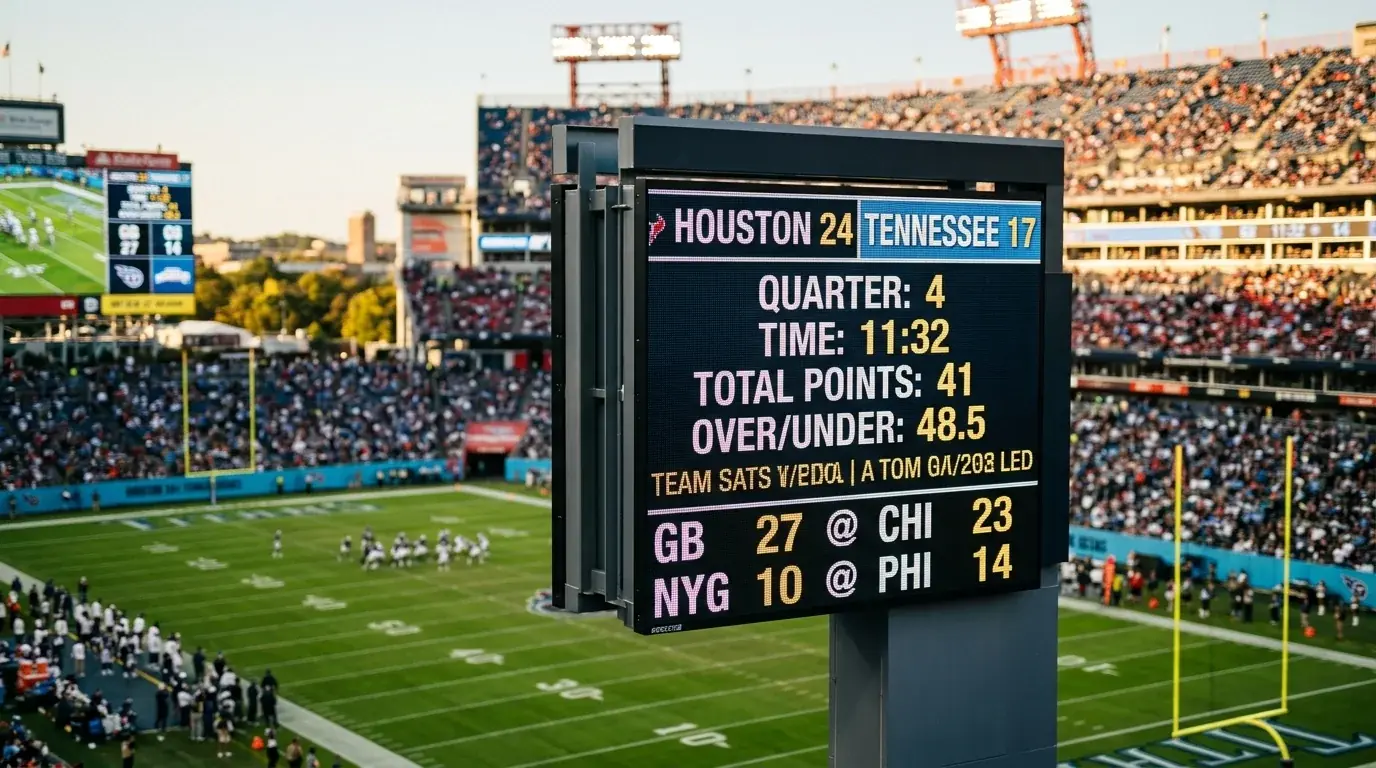
The total is posted as a half-point number — 44.5, 47.5, 51.5 — to eliminate the possibility of a push (a tie between the total and the combined score). If the total is 47.5 and the final combined score is 48 or more, the over wins. If it is 47 or fewer, the under wins. That half-point is your friend: there is no ambiguity, no dead heat, no returned stakes.
Weather, Pace, and Defence: Factors That Affect NFL Totals
My single best season for totals betting was 2022, and the edge was almost entirely weather-driven. I built a spreadsheet tracking wind speed at outdoor venues against historical scoring data and found that games with sustained winds above 15 mph consistently underperformed their posted totals. The market priced in wind, but not aggressively enough. That gap has narrowed since — more bettors have caught on — but the principle remains: granular weather analysis gives you an edge on totals.
Pace of play is the second major factor. Some NFL teams run plays quickly, getting more possessions and more scoring opportunities. Others deliberately slow the game down, using the running game and the clock to limit possessions. When a fast-paced offence meets a slow-paced defence, the total reflects a compromise, and your job is to determine which team’s pace will dominate the game flow. The team that wins the time-of-possession battle typically dictates the tempo.
Defensive quality shows up in totals most clearly through turnover generation and red-zone efficiency. A defence that forces turnovers creates short fields for its own offence, potentially inflating the total. A defence that bends but does not break — allowing long drives but holding opponents to field goals instead of touchdowns — suppresses the total. Looking at red-zone defence percentage (how often a team allows a touchdown when the opponent reaches the 20-yard line) is one of the most predictive metrics for totals analysis.
Venue matters beyond weather. Dome games tend to produce higher totals because the controlled environment favours passing. Outdoor games in cold-weather cities late in the season trend lower. Altitude — specifically Denver, which plays at over 5,000 feet — has a measurable effect on kicking and ball flight, though the impact on total scoring is debatable.
When to Bet Totals Instead of the Spread
I default to the spread when I have a strong opinion on which team will win and by how much. I default to totals when I have a strong opinion on the game’s character — high-scoring shootout or defensive grind — without a firm view on the winner. The two markets are not interchangeable; they test different aspects of your analysis.
Totals are particularly attractive in games where the spread feels like a coin flip. When two evenly matched teams face off and the spread is sitting at -1 or -2, the market is essentially saying either team could win. Picking the right side of that spread requires predicting a narrow margin of victory, which is extremely difficult. But if both teams have elite offences and mediocre defences, the total might offer a much clearer over play. You are capitalising on the one thing you are confident about — the game’s scoring environment — without needing to get the winner right.
Conversely, totals are a poor bet when you do not have a specific view on scoring conditions. Betting the over because “both teams are good” or the under because “it feels like a low-scoring week” is not analysis. The NFL betting strategy guide covers how to integrate totals into a broader weekly routine that includes spread and moneyline plays alongside over/under selections.
What happens if the total lands exactly on the number in NFL betting?
Most NFL totals are set with a half-point to prevent this scenario. If a bookmaker offers a whole-number total and the combined score lands exactly on it, the bet is a push and your stake is returned. This is increasingly rare on UK platforms, which predominantly use half-point totals.
How does weather affect NFL over/under lines?
Wind, rain, snow, and extreme cold all suppress scoring in outdoor NFL games. Sustained winds above 15 mph are particularly impactful because they disrupt passing accuracy and field goal kicking. Bookmakers adjust totals for weather, but the adjustment is often conservative, creating potential value on the under in adverse conditions.
Published by the Sports Betting nfl team.